Episode #5: Steve Bartek
↓ English transcript ↓ | Traduction en français (à venir)
Steve Bartek : Coffee & Guitars - Recollections on orchestration
Gabi Chesnet
Hey there, I’m Gabi!
Cyd Levine
And I’m Cyd!
Gabi Chesnet
This is episode 5 of Musicians’ Teatime, following Tiyanée and I’s little stint in Los Angeles.
Cyd Levine
So, who did you have the pleasure to share a cup of tea with this time?
Gabi Chesnet
It turned out to be, actually, several cups of coffee we had with Steve Bartek. Mainly known as Danny Elfman’s main collaborator and orchestrator for the last 45-something years, and he was one of the driving forces behind Oingo Boingo, but he’s done so much more since his humble beginnings on the flute in the cult psychedelic Strawberry Alarm Clock, back in the 60’s.
Cyd Levine
There’s a lot Steve is up to now, and he had a lot to say about musicianship and music itself. It’s peppered with anecdotes and laughter, this is a long caffeinated chat with Mr. Bartek that’s definitely worth listening to. Hope you enjoy, let’s get into it!
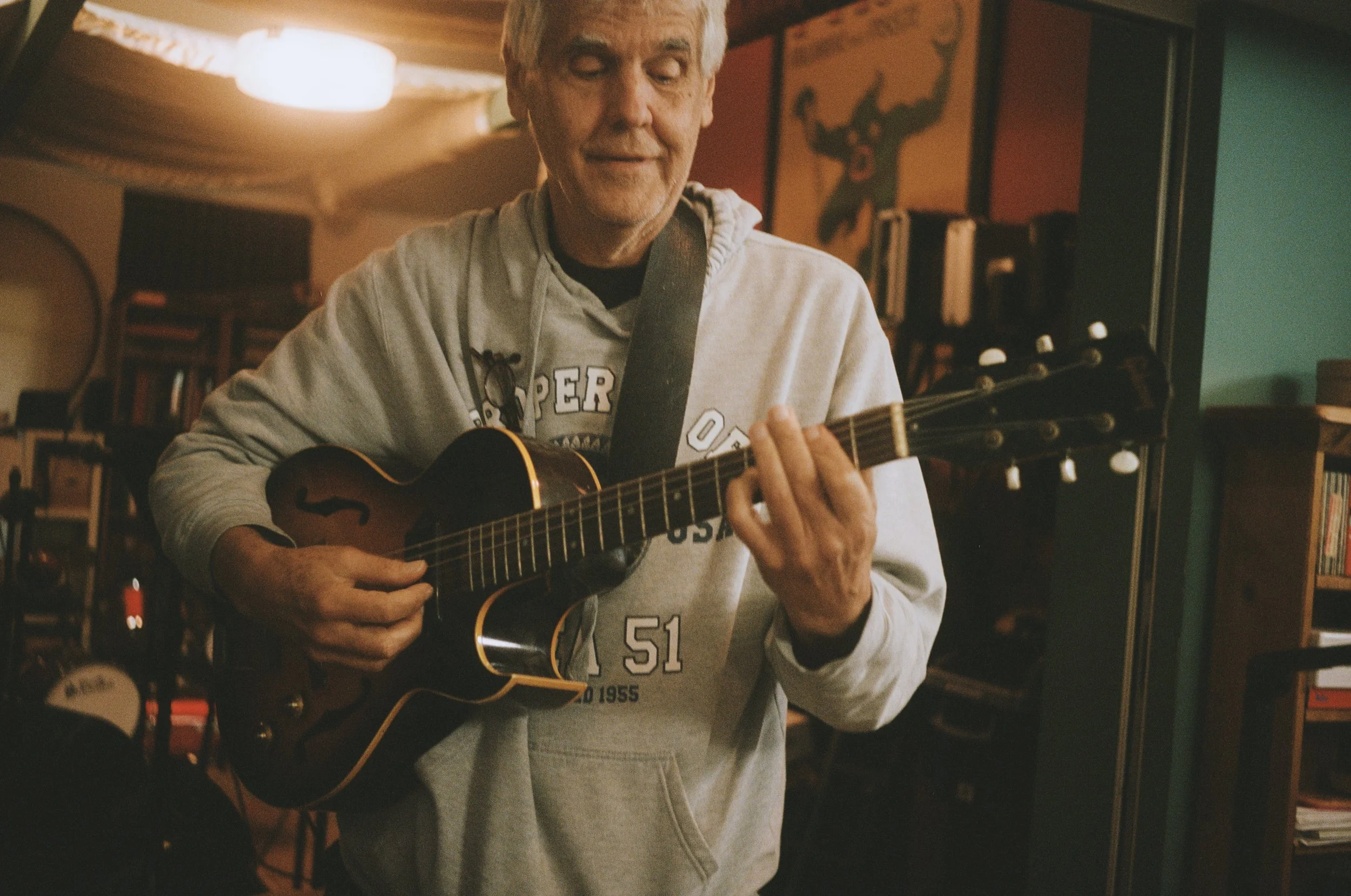
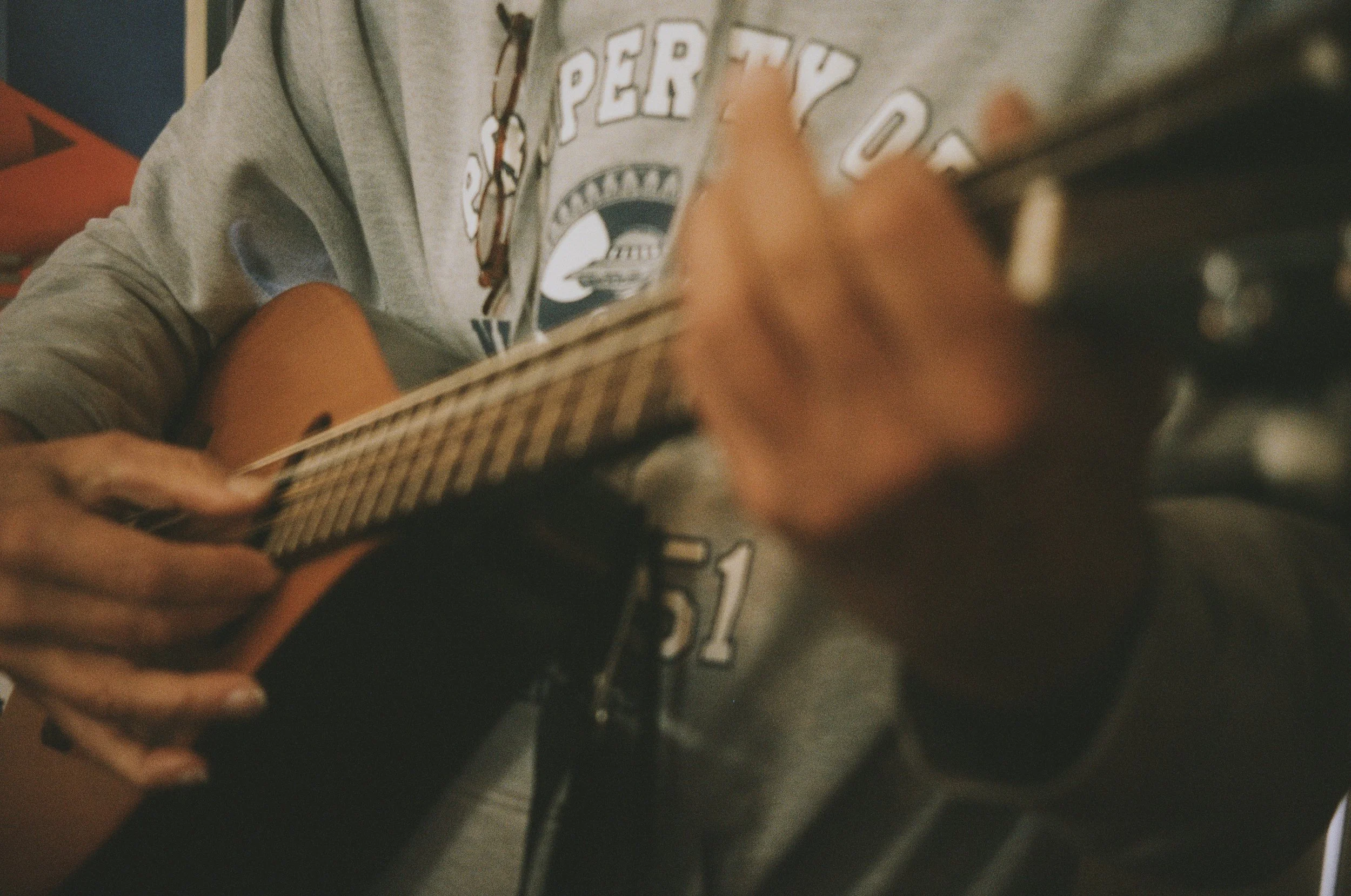
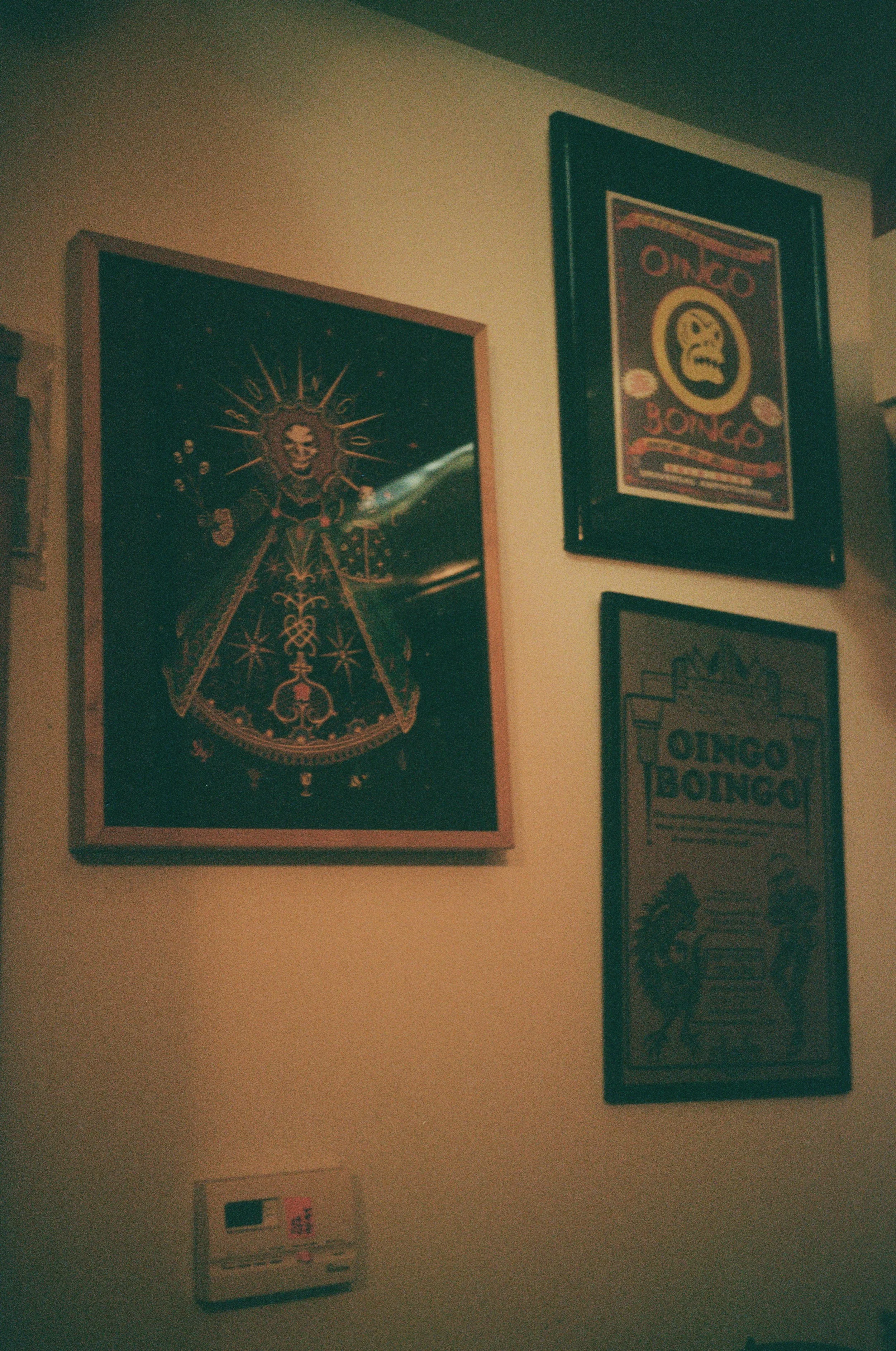
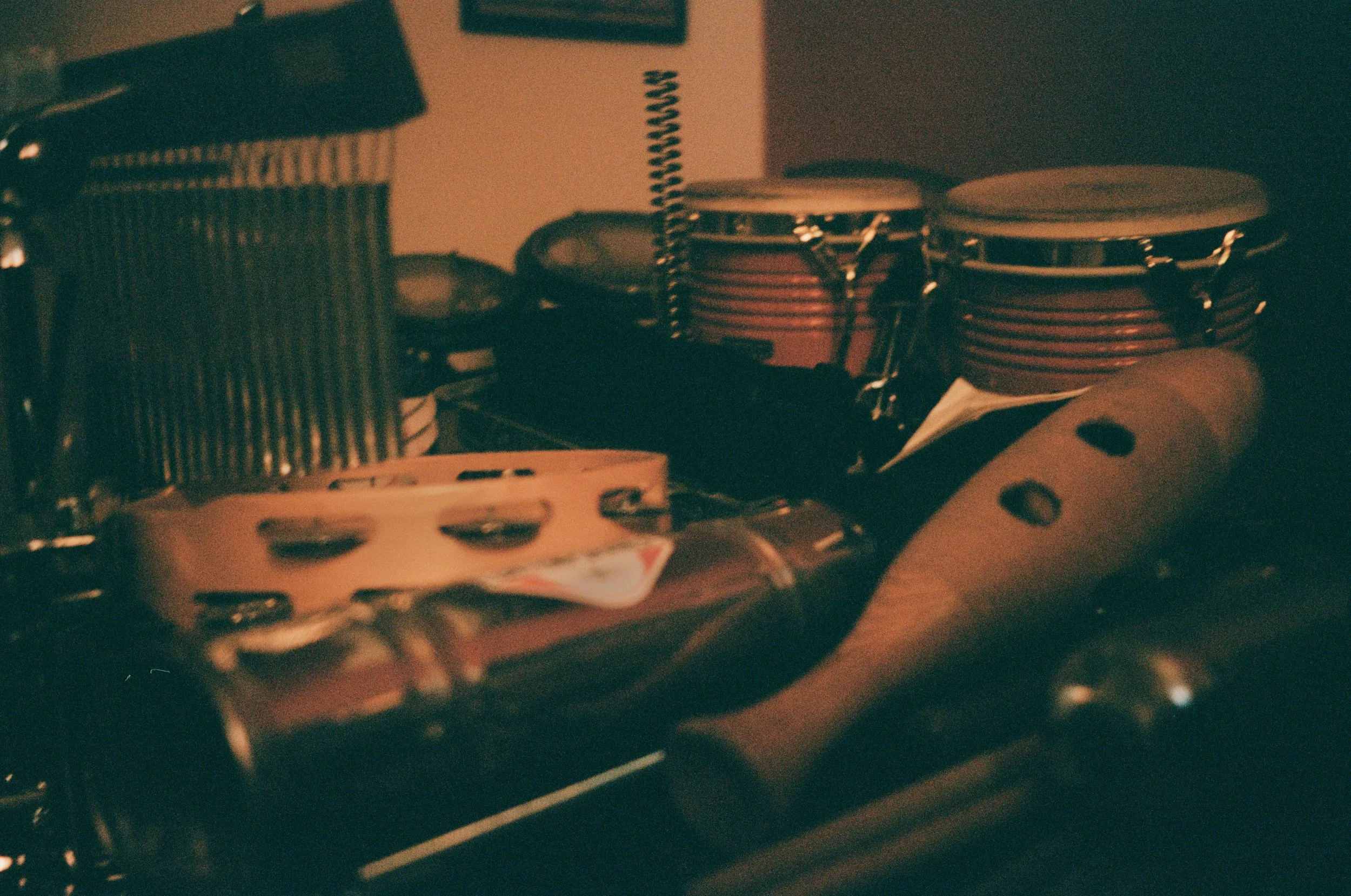
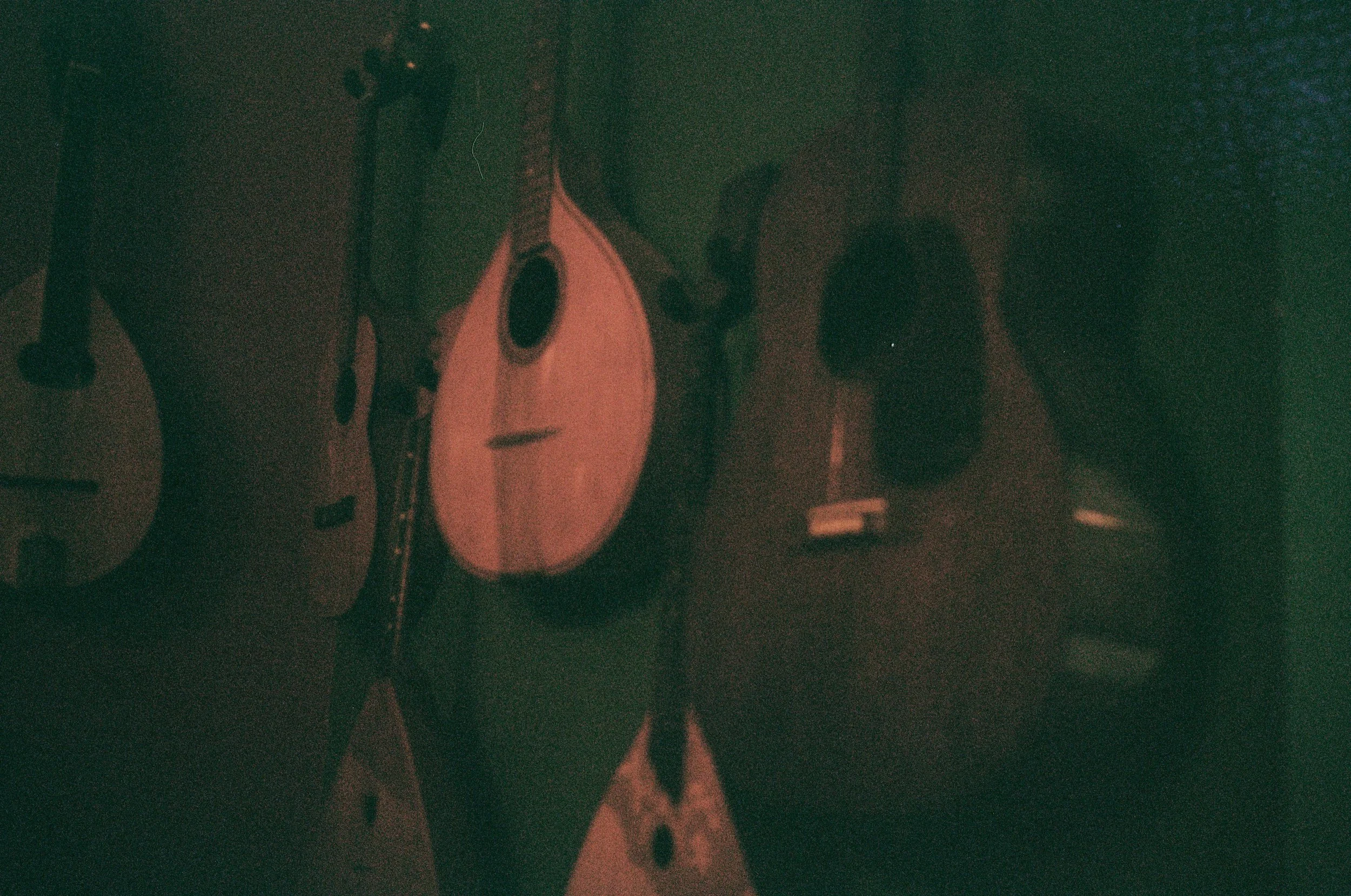
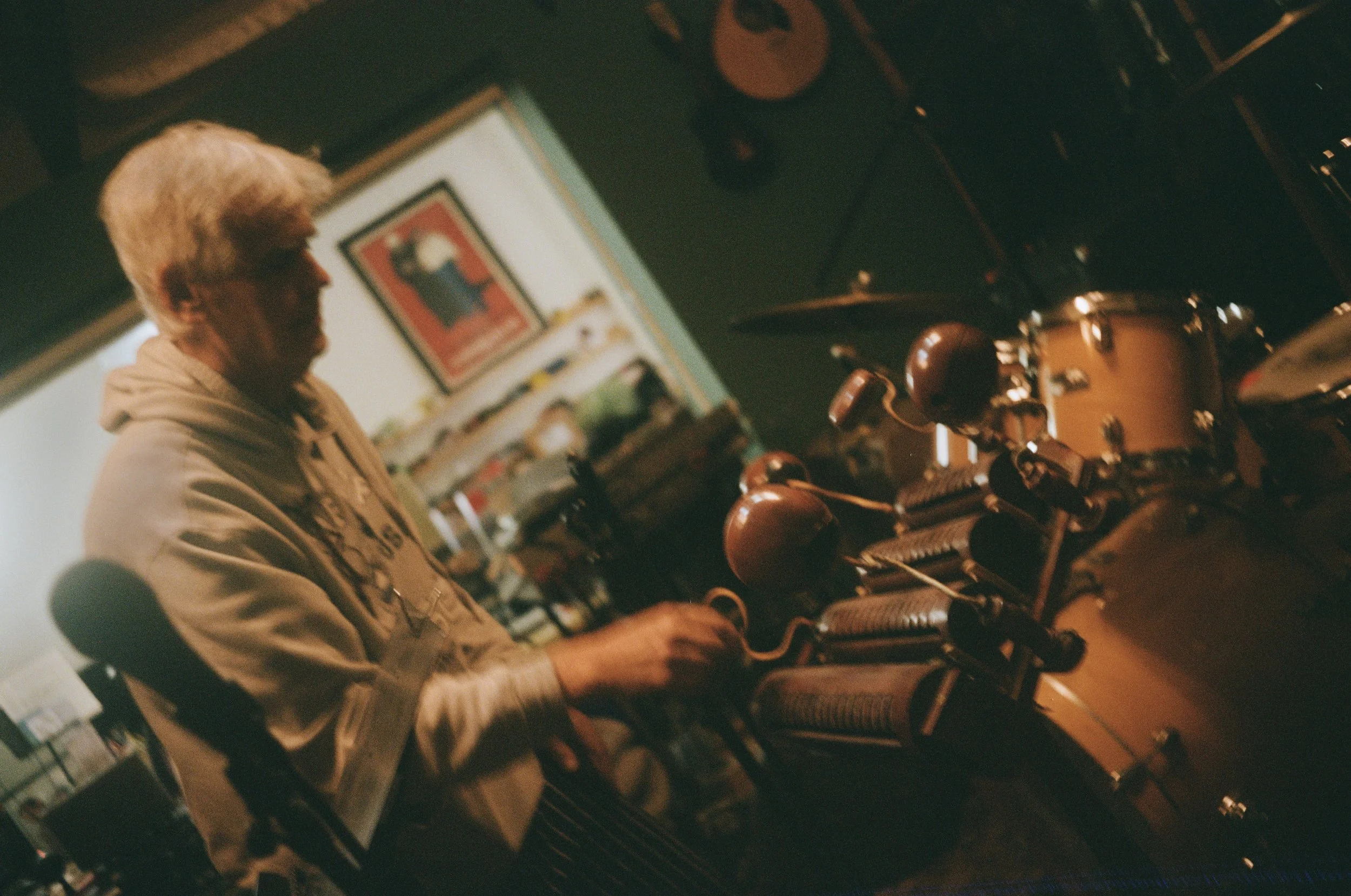
35mm photos by Gabi Chesnet for AAR
Gabi Chesnet
Hello, Steve Bartek, and welcome to Musicians' Teatime. Thank you very much for joining us.
Steve Bartek
My pleasure. Honored to be asked.
Gabi Chesnet
You've had a very varied career in life. How would you describe yourself at the moment?
Steve Bartek
At the moment, I feel very lucky that I'm still doing music, at my age. I still have people that hire me and rely on me to orchestrate or play in bands, play guitar. I have people that enjoy playing with me and I enjoy playing with, so I feel very lucky I'm still doing something in music.
Gabi Chesnet
We've had a false start, unfortunately, but you were talking about three things that you do every day.
Steve Bartek
Just lately, to try to keep myself going. I try to do about a half hour playing my flute, which is the first instrument I ever learned when I was in third grade, I took flute lessons. And I try to spend some time, maybe not a whole half hour, maybe sometimes more, of writing something. I forget what the third thing was, but I try to play the guitar before I go to bed every night too. So every day, even if it's busy with all the other stuff, I try to get those three things in. I recently bought a bass flute from Sam, the sax player in Boingo, and just blowing on it is kind of spiritually enhancing, just the sound of a bass flute... It just feels good, once a day.
Gabi Chesnet
You said you started learning that in third grade. As far as you can go back, what's your first memory of music?
Steve Bartek
Oh God! I remember having a record player, my brother had the early Elvis records. So we'd have that, and my parents had - this one really stuck with me - had this weird record. I'm trying to remember the name of the guy. He was a harp player who, I found this out later, who wrote music for the Ernie Kovacs show. It was a record that was called "The Song of Nairobi Trio", and on the other side was "An Occidental Slip on an Oriental Rug". It was very kind of humorous, semi-jazz but not really because it was a harp player who wrote it. And it was very percussive, there's like marimbas and things... The Song of Nairobi Trio was used on the Ernie Kovacs show for a skit, it was an ongoing skit. Why my parents bought this record, I have no idea, but I listened to it over and over. The Song of Nairobi Trio was a skit where they had three people in ape suits playing instruments, and they bang each other on the head. The real song was called Solfège, because it goes do-ré-mi - it does that in the song - but it became the Song of Nairobi Trio when it was associated with Ernie Kovacs. Useless information.
Tiyanée Stevens
Come back to it! I love this.
Steve Bartek
That was the record I remember hearing all the time. Something that inspired me when I heard the flute was Herbie Mann's blues set. A song that I'd heard on the radio because my parents listened to... I forget the singer's name, and hearing Herbie Mann do it inspired me to take the flute lessons- actually, the flute lessons happened because... Nancy Billington was taking flute too. So in third grade I wanted to sit with Nancy Billington. [GC: Did you?] Yeah, we did. We both played flute and that was as far as it went.
Tiyanée Stevens
You mentioned ape suits in your first memory of music, was that inspiration for the Mystic Knights [of the Oingo Boingo] costuming?
Steve Bartek
No, the Mystic Knights is Danny and his brother. So I came into that, the ape suits were already there. [TS: Oh, synchronicities there.] Yeah, the ape suits existed. With Oingo Boingo, I auditioned for Danny. He was changing his street theater to being more of a concert or show, because he'd ended up having films made, and made it into a whole show. Before that, it was just kind of a street band that his brother had put together. You can find all kinds of information on all that. But yeah, I had nothing to do with the costumes, they were there. That's all Danny, and Leon Schneiderman, the sax player, was instrumental in putting together what the band looked like. He and Danny had built the instruments that the old Boingo played, Balinese-style instruments and Balafons, African Balafons styles.
Gabi Chesnet
When did you come into that? Wasn't that 70-something?
Steve Bartek
'76, maybe '77? Somewhere in there. I finally graduated college in '74 with a degree in composition, not knowing what the hell I was going to do, and ended up playing casuals and nightclubs. I had a gig at the Baked Potato with Don Randi, and Don Randi was the keyboard player on all the Wrecking Crew records. It was kind of a cool gig. It wasn't really jazz, but it wasn't rock and roll either. The Baked Potato on the off nights was the cool place for all the fusion jazz players to be. But Don Randi had the other three days with his band. It was fun. We did a 5/4 version of Norwegian Wood. [TS: Wow!] Yeah, he was a clever man. He still is, he's still around. He showed up opening for the Vatos band at one of the Canyon clubs. The Oingo Boingo Former Members band, I refer to it as Vatos because he's the leader. He showed up playing with his daughter and son-in-law as an opening act. It was really great to see him. He plays great.
Gabi Chesnet
You said it was jazzy - on guitar, were you raised as more of a jazz person, or are you all over the place?
Steve Bartek
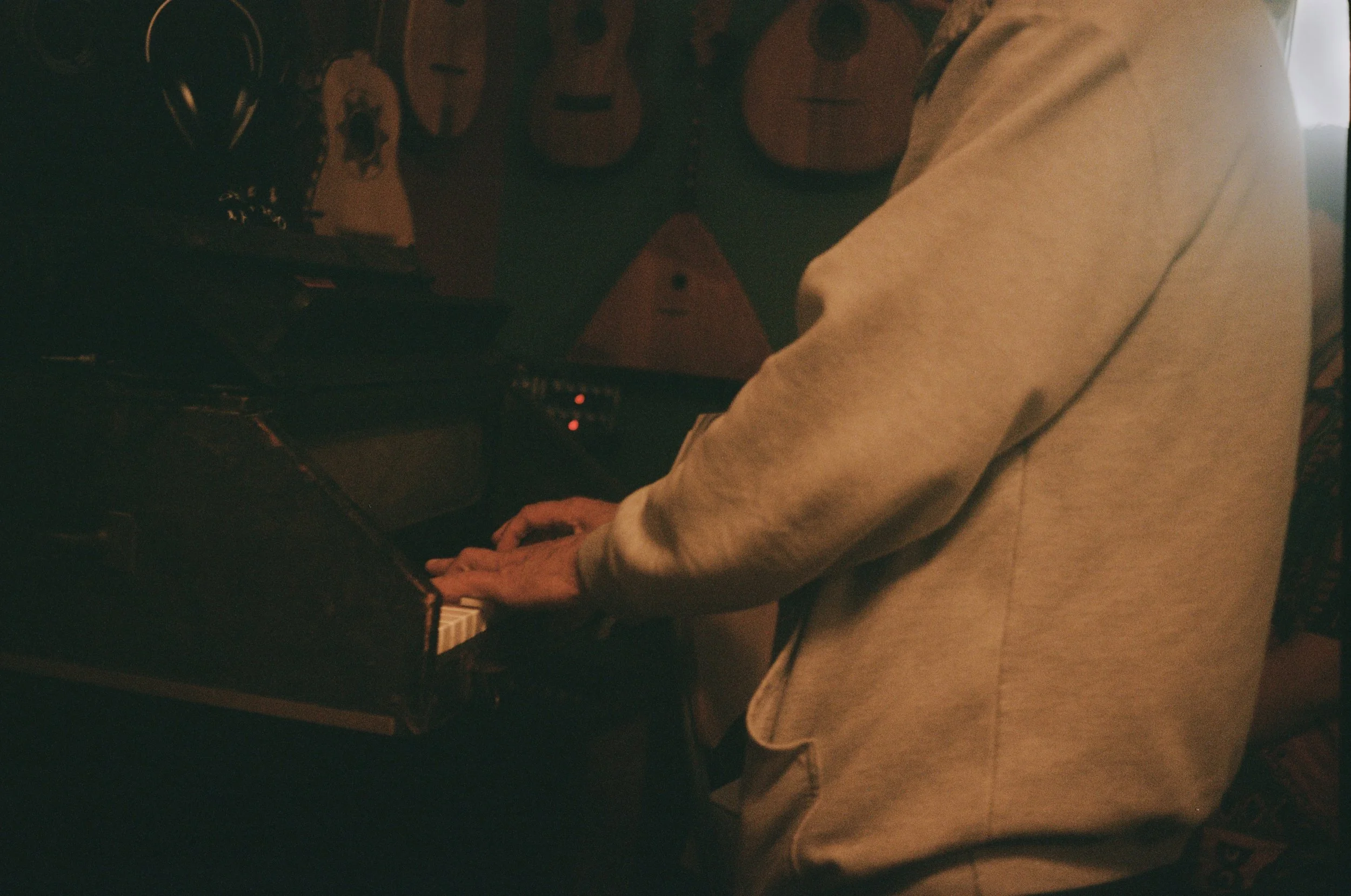
Kind of all over the place, but it seems like a regular trajectory. Well, I guess for me, and for a lot of players, the Beatles was the reason I picked up the guitar. My brother picked up the guitar, and so I used to sneak into his room and play his guitar, until finally he stood up for me and my dad got me a guitar. So we both had a good time. We had a little band together for a little while, which was nice. But I became enthralled with Django Reinhardt and Charlie Christian earlier, which is kinda jazzy. Actually before that, I was a complete Yardbirds fanatic. Jeff Beck. Eric Clapton, I missed being attached to him with the Yardbirds because he'd just left, so I learned all the Jeff Beck solos I could at the time. So I was securely kind of rock and roll.
I wasn't very Led Zeppelin, or some of that heavier stuff I wasn't quite into because I had turned to Django Reinhardt and Charlie Christian, and by college, I bought a guitar in a pawn shop that looked like the guitar Django Reinhardt had on the one compilation album that was released here at the time, and it had him holding an Epiphone Emperor. Which much later, I found out he only played when he was in New York for maybe a month, and it was not a guitar he used anywhere else. But I have one like that. (Laughs) So it's kinda like you go from a rock basis to jazz being put on top of it, and you end up with a fusion outlook, it seems to me.
Gabi Chesnet
That makes it so you're not a jazz guitar player snob.
Steve Bartek
No, I definitely am not a good enough jazz player to be a jazz player snob.
Gabi Chesnet
I do meet a lot of people for whom it seems like it's a contest who can play the most complicated chords with as many numbers and letters in them as possible.
Steve Bartek
Yeah. It's one step beyond me. A guy asked me once about Indian music. I forget what he asked me. I tried the Indian raga - I'm trying to think of what it's called - where you do an 11/8 pattern and end up on the downbeat. Going backwards, so you have to count how many of these are going to be there, and how am I going to get there, and what notes am I going to play that are going to actually make me-- I tried, but not very successfully. I didn't completely feel it.
Tiyanée Stevens
Growing up, you mentioned your brother. Was he a big mentor figure for you musically, or are there other people that you look up to specifically?
Steve Bartek
My brother facilitated me. Actually, at the point where he picked up the guitar, I had already been taking flute lessons. So I had a knowledge of music on paper, of music theory, that he didn't have. But he encouraged me, he let me play his guitar. He encouraged my dad to let me have a guitar. He helped me that way. He took some lessons for a while from - do you know who Ted Greene is? I took two lessons from Ted Greene. Ted Greene was, in LA, the primo teacher. He was in a rock band when I was in high school, then he ended up playing with Ray Charles for years, but then he came back to the Valley. He has this encyclopedic knowledge of harmony, motion and all those extensions that you're talking about.
For instance, the first lesson I had with him, I could play fairly well. So he said for homework I have to come back and improvise a Bach chorale-- no, a Bach invention, which is way more intense. That's why I only took two lessons, because he was expecting way too much from me. (Laughs) But he's got books out and followers. It's kind of like - do you know who Lenny Breau is? [GC: By name.] The one thing I've learned from him, which is just my surface knowledge of what he does - harmonics, mixing harmonics and straight open strings. He would do all these things that sound like harps going up and down, just like that on his guitar. Lenny Breau also ended up in LA before he died. He was Canadian and used to play with Anne Marie. Useless knowledge, sorry.
Gabi Chesnet
Don't apologize, it's fine! I told you, you can ramble. The theory stuff is interesting, because you said you went to college for composition. I mean, you don't sound like a theory nerd or anything. More like somebody who knows the rules, but decides not to abide by them?
Steve Bartek
Here's my take on music academia. They're behind what actually composers are doing. Theories are formulated after somebody has done something, to figure out what is it they did. So to follow rules that are made up from what other people had set rules, it seems... not progressive, not totally creative. It's good to see those rules and to know what they do and why they're there, I don't regret any of that. It's not like I regret any of my education. But it's how you use it. If you start writing everything that's all by the rules, it's just like, you have a 1-4-5 blues. And that's all you get out of writing a blues.
Gabi Chesnet
It's also pretty Western.
Steve Bartek
Yeah. In college, I got opened to a few really great things. I was in a Bulgarian band, we played a few places. But everything was all these fun time signatures, the melodies were angular and fun. Then I played the Javanese gamelan - Danny at the same time had been at CalArts, sitting in with the Balinese gamelan, which is much more aggressive. The Javanese and Sundanese are kind of more mellow. Which is one of the reasons why when I auditioned for Boingo, Danny and I kind of bonded a little bit on what kind of background we had. Part of the audition was playing Django Reinhardt, and I go "Ah, okay. I can play some of that. I can fake my way through it...". Because they had had a guy I know - trying to remember his name - who was a Django expert. He's written books on Django, he used to be the guitar player in the Mystic Knights of the Oingo Boingo before I joined. [GC: Stan?] Yeah, Stan! Stan Ayeroff. Thank you. (Laughs) Yes. You know too many people. Stan Ayeroff was in Boingo, and I was there to replace him. So I couldn't play like Stan did, but played enough that Danny liked it.
We ended up doing it in the show... Have you seen clips of the old Mystic Knights show? Okay, well the big gamelan, fake gamelan, metallophones - they were all made from pipes and drains. [GC: They were very DIY.] Yeah, yeah. Leon Schneiderman was in charge of all that. [GC: Pretty impressive.] Yeah. He did a lot of good work. But the other thing with Danny and I; we coincided on some of the background, and things that he wanted to do. I learned about a lot Cab Calloway and Duke Ellington from him, basically, because that's where we were going. I had to do a lot of research on things I was only moderately familiar with, but joining the band ultimately opened me up to all kinds of stuff. So that's when I quit Don Randi's band. We had a show someplace in Hollywood, the Ivar theater, we were going to open, so I quit the Baked Potato and... the theater burned down. (Laughs)
Gabi Chesnet
Was all the equipment safe?
Steve Bartek
Luckily, most of the equipment that was worth something was in a little fireproof room inside the theater, luckily enough. So we didn't lose much. Tom Pedrini, his father owned Pedrini's Music somewhere east of LA, and I think he lost a piano that wasn't in the room.
Gabi Chesnet
So that was kind of the end of that.
Steve Bartek
For the Mystic Knights, that became a stopping point, I think. We had to regroup slightly after that, because everybody was expecting to do this show that we'd been rehearsing for and had costumes and sets... [GC: It's kind of a bummer.] It was a major bummer at the moment, but that's the moment that Danny made me musical director. Because he didn't want me to leave. (Laughs) He's manipulative, but sometimes for everybody's advantage.
Gabi Chesnet
Okay, wow! That's a big word. [SB: ...You know.]
Tiyanée Stevens
We said we don't do bullet point questions, but we do have them just- [SB: (Laughs) Just in case I fail.] No! We do that for everyone else. Performance rituals and anxiety?
Steve Bartek
Oh, wow. Always. I'm always scared and anxious, even afterwards.
Tiyanée Stevens
I remember at the JackiO show, we were gonna come up and talk to you and you said "I need fresh air".
Steve Bartek
Yeah, anytime, particularly like that - even a big show - I try to get there early enough to know that everything's set, everything works. At Ireland's 32, you really don't have time to check everything. And you're always nervous before you play, you know. I always foresee, "Okay, I'm gonna blow this, I'm gonna blow that--" and then afterwards, I'm all anxious, "Agh, I just made a fool of myself". So I quickly try to pack everything up so I can get out as fast as I can.
Gabi Chesnet
Has it always been like that?
Steve Bartek
Yeah, yeah. There are the few gigs that... This is also my theory of why people stay musicians. At the beginning, it's obviously not for the money. It's because you do so many awful gigs, with either a bad performance, a bad audience or, you know, a bad room - then there's that one that is just magic. You know, the interaction between you and the other musicians, the audience, the whole thing is just magic. Then that reinforcement keeps you going through another dozen awful gigs, or a year or two of awful gigs, because you're looking for that moment in the back of your head. Not consciously, but that keeps you as, "I'm a musician".
Tiyanée Stevens
It's like an addiction. [SB: Yeah.] In a more positive way.
Gabi Chesnet
Maybe a difficult topic to talk about, but we had mentioned that with Richard Gibbs. We were at his studio recently, just hanging out. We were talking about imposter syndrome as a musician. [SB: Ha!] Which is something that seems to happen to all of us. Do you think you suffer from that?
Steve Bartek
Yeah, I think all musicians do. Because you figure, "Why am I... Is this me doing this? Am I... here? Do I--" I mean, particularly when there are fans, you go, "Okay, why did they want to talk to me? Why did they like what I did?", you know, I'm faking my way through it. [GC: Fake it until you make it.] Yeah, exactly. Well, I mean, that was Danny's dictum when we had finished Pee-Wee. It's like, "Well, let's learn while we earn", and then started doing TV stuff. Because he'd done one film as composer, I as an orchestrator, and so it was, "We're gonna fake our way until someone says we're no good". (Laughs) So yeah, I think that's right!
Tiyanée Stevens
It's unfortunate that musicians still think that, even well-respected musicians like you, but it's definitely comforting for young musicians.
Steve Bartek
I can see how, at some point, it's stifling their art. I mean, it's not like my entire life is engulfed in that. But particularly when performing, it feels like that. When you're writing something, writing with other people, you feel like you know what you want, you know what you're trying to do, and you have ideas about what the music's supposed to do. So I think that imposter idea doesn't really play into those exchanges, it seems to me, but when you get up on a stage, it's like... (gasps)
Gabi Chesnet
Well, you're kind of giving up control there. [SB: Yeah.] It's not on your own terms. It's a bit terrifying.
Steve Bartek
Ah, you've been there! (Laughs)
Gabi Chesnet
Do you enjoy more of the stage now? Is it a 50-50?
Steve Bartek
It's funny, back when Boingo was still touring and it was overlapping with Danny writing stuff. We did some TV shows, we had to listen to the recordings, because we couldn't be there, on the phone while we're on tour in a hotel room. It seems that when you're stuck in front of the computer, or in front of - I used to do it all by hand - a drawing board for a recording session for a film or TV, you ache to be in front of an audience and playing with other musicians. And when you're in front of the audience, doing a tour where you're repeating the same songs every night, even for a week or two, you ache for the opportunity to be with the best musicians in the world playing stuff that you wrote on paper.
Gabi Chesnet
Even now?
Steve Bartek
No. I think I've come to terms with both of those parts of my life. After the band broke up, I kind of didn't play guitar for almost 15 years, with anybody, really. I played my guitar here, but Bear McCreary hired me for some stuff, and it was just like, "Oh, yeah". Then my wife encouraged us to have backyard jams. So during the summer, we'd come up with a theme. Like a band, usually two bands, like we'd do the Rolling Stones and Tina Turner, because there was some connection between whatever it was. I'd do charts, I'd find music and make charts so that musicians that came could just sit and read, and play songs that they would have liked to have played but don't know, and don't have to make the effort because the charts are there. When we started that, it was a revelation to me to be able to play guitar. I mean, spurred with Bear actually hiring me as a guitar player, which hadn't happened in, you know, 15 years before that - nobody.
Gabi Chesnet
That's a hell of a long time, if it's something that was really your passion in life.
Steve Bartek
Yeah. I realized, once I was back into playing regularly with other people, how important that was, as a musician. The interaction between you and another musician, as opposed to, you know, sitting in your room, writing something and recording it. And that's all fine. But the real magic happens when you're with another musician. In fact, even recording the difference between someone overdubbing your vocals five times and having five singers in a room, singing with the frequencies in the room, interacting, intermodulating. And the difference between a sample piano, where they sample every single note - you play a chord, well, they're each individual note, they're not interacting with each other on the instrument. But you play a piano, and there are intermodulating frequencies in that thing that are different than you're going to get with a sample piano. It's just not the same thing. I feel that way about everything. (Laughs)
Gabi Chesnet
That surely echoes pretty much what...
Tiyanée Stevens
Yeah, we were already planning on asking about that.
Gabi Chesnet
Because of what other musicians have told us. [SB: Ah, good! So I'm not alone.] [TS: In terms of libraries versus live.] People like Ira [Ingber], David [Raven] and John [Avila] all said that there's this thing about chemistry, when you play with other people.
Steve Bartek
It's more than just chemistry, it's physical. The frequencies in the room... It used to be they put up mics in the room and you'd play. Some of those old recordings sound marvelous. And now they put baffles around everything and nothing interacts. So part of the thing Ira and I did was, we'd like, do percussion things, but we'd put a mic up so that we couldn't change and that the mics were feeding each other and there was leakage; and that old leakage actually adds to the overall sound. So I think it's not just emotional, it's actually physical.
Tiyanée Stevens
It's weird if it's too perfect.
Steve Bartek
We did Terminator 4 in London, and something about the schedule or the budget - we had to do the Hans Zimmer way. We did strings, we did woodwinds, and then we did brass. And it's absolutely not the same sound as when you have an orchestra playing a piece of music. So after that, we realized that everybody had trouble playing-- You record strings. They tune to themselves. Their fifth in a nice string chord is going to be more perfect than a piano fifth, unless they're playing with a piano. Using your ear - the thirds, the fifths, everything is not exactly just intonation. I mean, not just well-tempered. It is just intonation.
Gabi Chesnet
Trying hard to recall what I learned about orchestration.
Steve Bartek
I finally read a book that that confirmed it. They had recorded a piece, Eroica Symphony, without a piano, and the piano player came - and they tuned to A440 or whatever. Piano came in, and nothing sounded in tune. It's because when they're playing with a piano, they tune differently. So Danny and I, we always try to record with everybody in the room, even if we have to stripe out separate things. Everybody plays the piece, we get a chance to record at once with everybody playing. And then the editors invariably have to have stripes, so that they can change things on the dub stage and for the movie; but once everybody's played it, the strings know how to tune to what the brass are playing, the brass have heard the strings in the room and can tune to them, and the woodwinds too, so the tuning just happens much easier.
In Terminator 4, it was awful. The brass had to tune to the strings, and the strings are gone! It's not like we can go back and retune the strings - but the strings were playing to themselves. They sounded great by themselves. But we'd try to get the woodwinds on, or the brass on, and there was tuning problems.
Gabi Chesnet
Do you have any strong feelings about the orchestral libraries, people who don't actually record with orchestras?
Steve Bartek
You can kind of usually tell. The biggest deal is it's very unrealistic sound, in that one string note has what, six players on it, maybe, or 12, depending on what sample you choose. So you have a 5-note chord going on, by the time you're done you've got a 100-piece string orchestra. Well, when you go in to record, you don't have that, so it's not going to sound like that.
Gabi Chesnet
You don't use them when you're putting something together, before you actually see the orchestra?
Steve Bartek
Danny has to do mock-ups. So he does that. I've worked with a guy, Jon Brion, do you know? [GC: Yeah!] I always defer to his philosophy. He writes on a Casio. When I started working with him, his philosophy was, the notes have to make the emotion. The notes have to make whatever's happening on screen work, not the samples you use, not that part. So when he had something for me to orchestrate, it would be this cheap Casio that I'd have to make come alive, which is an excellent philosophy.
So the same thing - I mean, Danny does mock-ups and he has to show it. You have to show it to the director - Jon Brion refuses to show much of that to directors, he doesn't show mock-ups, and he doesn't like them to take it. Because what they do is they take the demo, they put it in the film, and they have to show everybody... Which Danny does, and his mock-ups are, you know... Which is good, you don't want them to be so slick that - which has happened - so slick that the director gets used to hearing these mock-ups in the thing. So when the real orchestra comes, it becomes a different animal. Problematic.
Tiyanée Stevens
This is going back in our conversation. Your own personal purpose of music, do you do it because it's therapeutic for yourself, or do you do it to bring the joy of music to others?
Steve Bartek
Kind of neither. I do it because I feel I have to. I mean, I wake up in the morning and I want to play. I want to do something. I'm not doing it thinking, "Oh, this piece is going to be played in front of some orchestra", as opposed to when I'm orchestrating, it's like, "Yeah, I'm getting paid to make this", as a facilitator, make Danny's music, or Jon Brion's music work with an orchestra to film. The two options - it didn't seem either of them were what I think of when I pick up a guitar.
Gabi Chesnet
So it comes from somewhere else.
Steve Bartek
I think it comes from when I first took the flute. Musicians came to my elementary school and played instruments, and I fell in love with the flute. It's just aural pleasure, you know. I never thought I was going to be making money playing the flute... or bringing pleasure to anyone. (Laughs)
Gabi Chesnet
We have a friend who had an interesting question. They get the impression that you have refined taste and a strong artistic sensibility. Is there anything you're passionate about?
Steve Bartek
I've never considered myself the capital-A artist. I've always kind of looked at myself as more... I do the best I can. [GC: It's the ego thing.] Well, you know, you get proud of what you do, but I never considered myself a capital-A artist. So I'm flattered that they feel I have those kind of sensibilities. I do consider myself a little different than other guitar players and orchestrators, I feel that I have something singular that makes me different. And I'm not saying better or worse, it's just I approach things a little differently than most of the other people I know and have worked with, which is great. Some of the people I work with, with Danny, the other orchestrators are excellent at catching what my approach is and emulating it when they approach Danny's stuff. I like working with the people I work with.
Gabi Chesnet
So there's a difference in the sense of what you do?
Steve Bartek
Just between Ira and me. Ira is real rock and roll guitar-based blues, and he understands all that stuff. I understand it a little. I understand it enough to talk to him. But I started playing music on the flute and it kind of, in retrospect, affected the way I play guitar. Even the tone, I used to have a Les Paul and the tone was always more flute-like, it was all kinda round, and I was playing more individual melodies rather than big strumming, articulated kinds of things. So I learned how to do some of the stuff Ira does, but I can't do it like Ira does. Ira has like this innate feel for it. I look at it from a slightly different [perspective], like a woodwind player.
Gabi Chesnet
You're kind of thinking outside of the box.
Steve Bartek
I like to think that I think out of the box. (Laughs)
Gabi Chesnet
It's like there's this particular sound that you've got in what you write, for example - I could be wrong - but like using a lot of diminished or making flat-sixths, or whatever.
Steve Bartek
And I attribute some of that to my education. Do you know who Olivier Messiaen is? [GC: Of course.] Yeah. So when I discovered him in college, it was just like, "Oh!" you know, non transpositional modes, rhythmic modes and things like that, just like "Oh! Wow!!"
Gabi Chesnet
It's all that silly, kind of wacky sound.
Steve Bartek
But it's the kind of thing that's stuck in my brain. And even if I'm in the middle of a solo, I think those things pop in.
Gabi Chesnet
That's very particular - people seem to be scared to think outside the box. The words that came to my mind were "silly" and "wacky", but that's really reductive! I'm sorry.
Steve Bartek
It's good. I had a moment with a guy named Paul Cartwright. He's a violinist, plays for Bear. He was in the orchestra with Danny the other day. We were at Ireland's 32 and he came in and played. Playing in A minor or something. And I just decided, I'm going here. And at the same moment, he came with me - to exactly where I went. So it was just like, "Okay, I'm not alone". You know, "I'm not the only one who thinks this way". [TS: Musicians' hivemind.] Yeah, it was it was a wonderful moment.
Tiyanée Stevens
We've mentioned Ira a lot in this conversation. You two have put together a thing.
Steve Bartek
Yeah, he probably describes it much better than I do. I forget how it started. The first one, we sat together and he picked a chord, I picked the chord, he picked a chord, I picked a chord. We picked the time signature, four beats on here, five beats on here, six beats on there. And we played, both of us on instruments that we're not comfortable with. I played a little guitar I had when I was in high school, and he played... a 12-string? He played something we were not comfortable doing, and we had to count the time signatures, and we ended up liking what it was. He edited it and put it together. So it's all these things; each time we do it, we kind of give ourselves a limitation or a plan, and make it so it's like the old process pieces, where you go through the process and you end up with something.
Gabi Chesnet
You challenge yourself and you work with limitations.
Tiyanée Stevens
Limitations has been a big theme in a lot of our interviews. Everyone's been saying that.
Steve Bartek
Yeah, well, same with film. You do limitations because you have to have it done. This has to be done by this day, all the orchestrations have to be ready to understand for that day. So you can only spend so much time futzing it and trying to make it like you want it. And it's like, well, it has to go. It has to move.
Gabi Chesnet
I don't know if it's that way for you, but I find myself constantly anxious and stuck if I'm in front of a white page and I have no limitations. I have to dig for it.
Steve Bartek
Yeah. I put together a band that I ended up calling Relative for a few years, for one period I wrote a bunch of fusion-like songs. The whole idea was to put together a band or we could just play free, with some guidance with the tunes that I'd put together. But given now that I should have time to do something like that, without the limitation that "Oh, there's a gig here", I have no push to actually do something.
Gabi Chesnet
Does that kind of tie in with the fact that you kinda describe yourself as being used by others? Like, you work better when given orders, or-- [SB: Yeah.] Not really orders.
Steve Bartek
(Laughs) Yeah. When I know what is expected of me, it's easier. I mean, I get things done. When I'm left to myself, I don't so much. I'm not that guy that is so self-motivated that he is writing every day, or doing something every day. Just recently I forced myself to do that, but that's not... My nature is like, (groans), you know.
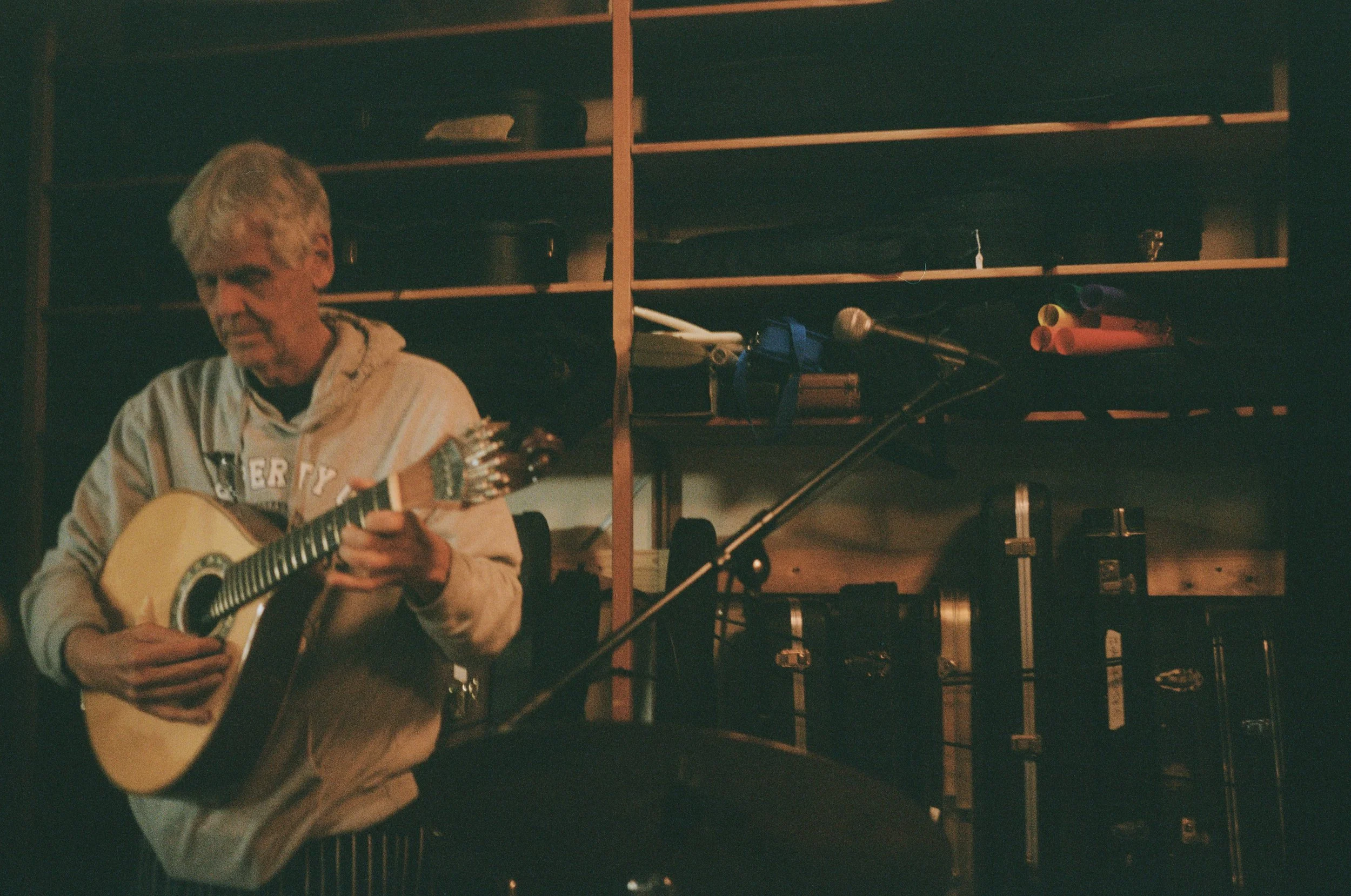
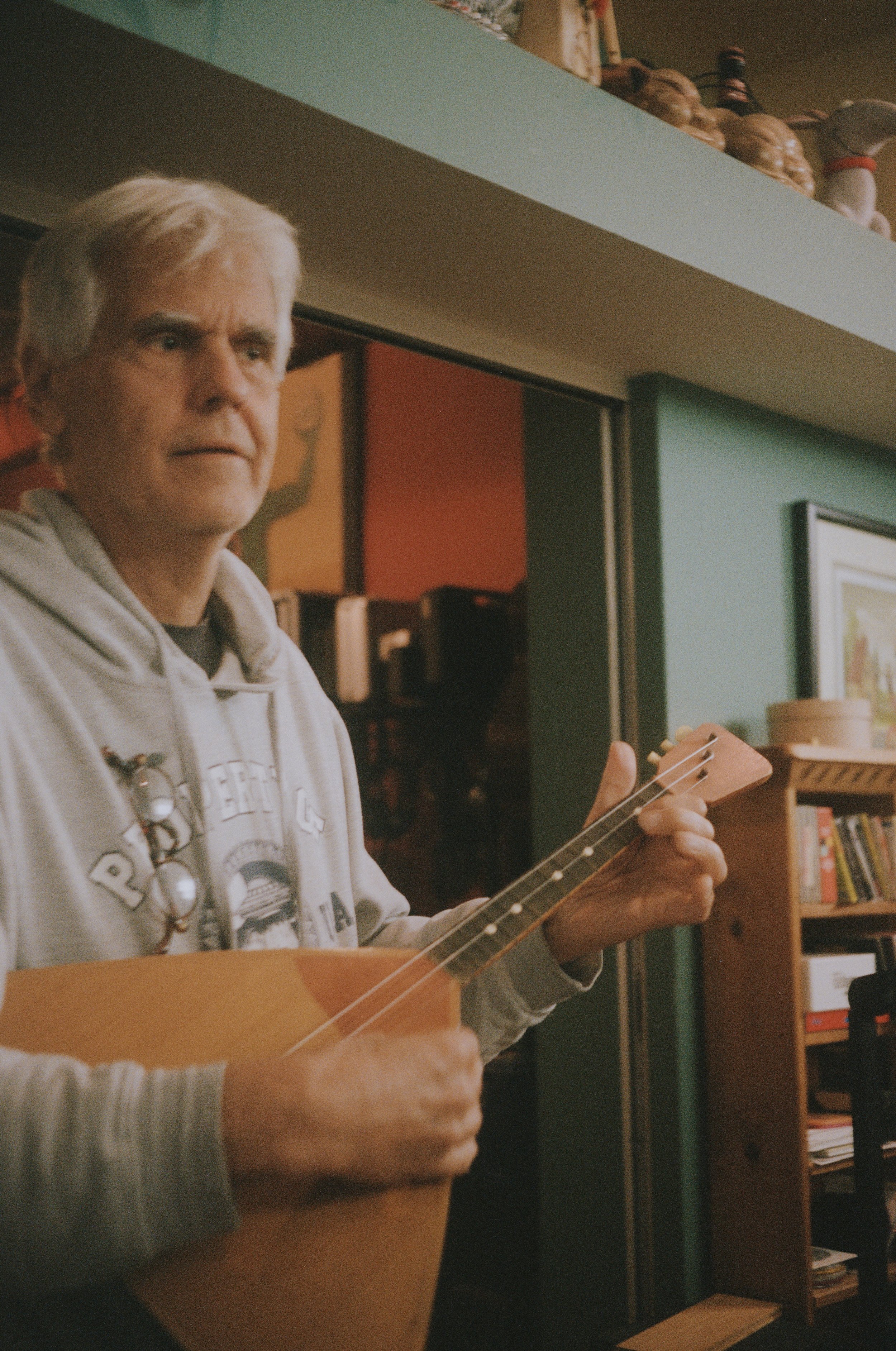
Steve playing a mandolin
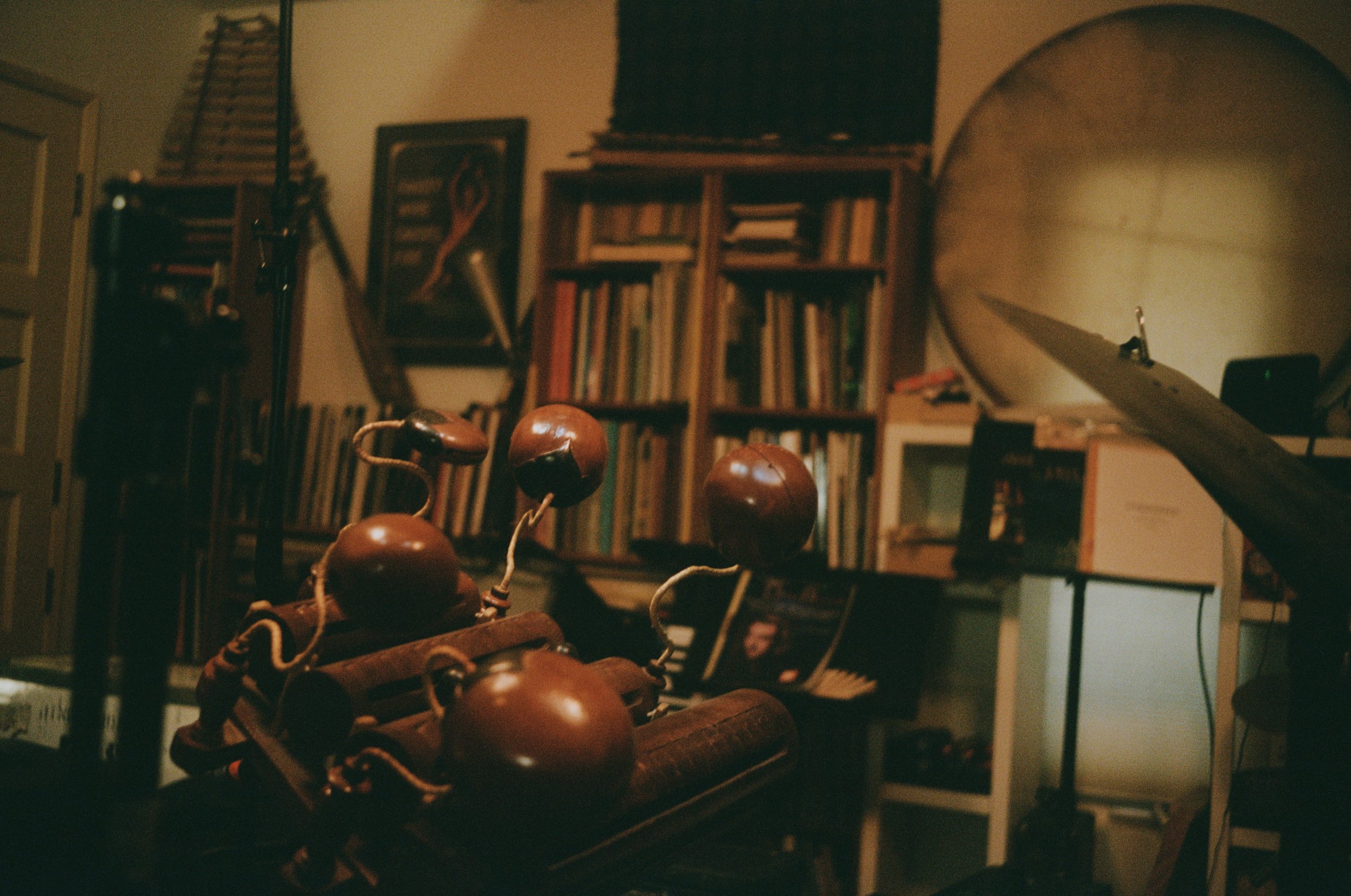
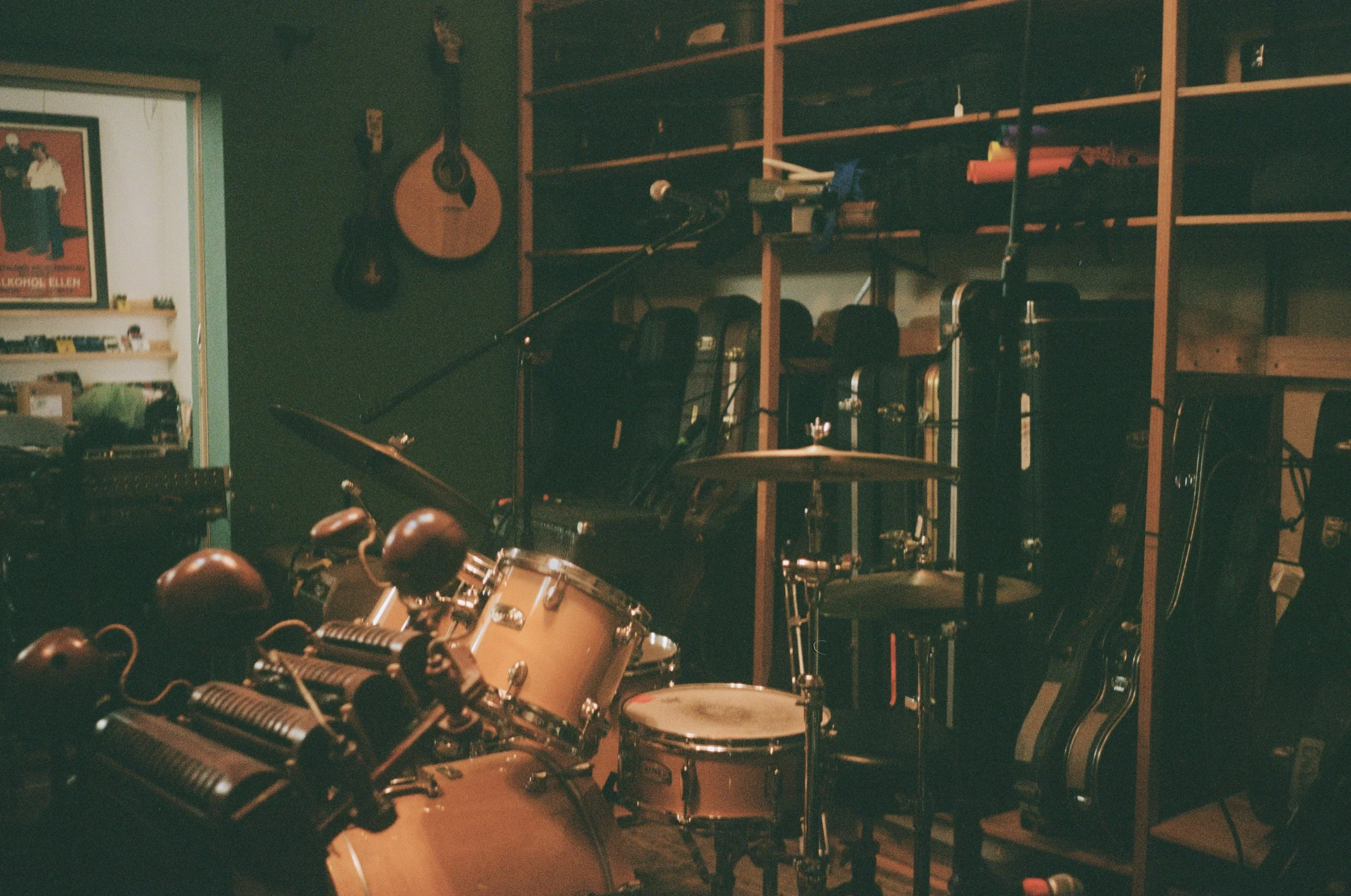
A Danmo, Vietnamese tuned percussion
Gabi Chesnet
We've been lucky to hear some of the tracks from the new project, and it is very creative. There's lots of things we wouldn't expect.
Steve Bartek
Funny thing about most of it is that we're two guitar players, and most of it doesn't sound like guitar player-based stuff. Only a couple of them do. Well, the one with the video is pretty guitar-y.
Gabi Chesnet
Yeah, the one that just came out. What was that about?
Steve Bartek
The lyrics and vocal or are all Ira, he came up with that. He had that idea in the back of his head before we even did anything. Before we came in here, I gave him notes, he gave me a couple notes, and then we made a little line. We played a little line with harmony. We played it over, figured it out and edited it together. Then we opened a place where we just jammed a little bit. With some editing, which he did a lot of, he came up with this kind of poem, the lyrics that he put over it, making the point that he wanted to make, which is great.
Gabi Chesnet
We kind of pieced it together. We're like, what does it mean? What does it all mean?
Tiyanée Stevens
I get the opposing side effects. I didn't understand the meaning of it.
Gabi Chesnet
It's probably just meant to make our own understanding of it. I feel like, with music, telling people what things are about is kind of a bad thing. [SB: Yeah.] Letting people figure out for themselves is better.
Steve Bartek
I kind of agree, because if the composer's telling you it's about his dog or something like that, it just kind of takes the joy out of thinking that he's talking about God instead. You know, that's because dog and god... That's why it came out. (Laughs) My daughter's name is a palindrome. Backwards and forwards, the same. [GC: Like with itself?] Yeah, like, "Madam I'm Adam". I like that. [GC: That's smart.]
Tiyanée Stevens
Do you prefer memorized songs, like playing with OBFM doing Boingo songs, or do you prefer jamming? David had strong opinions about that, that's why I'm asking.
Steve Bartek
Well, as a player, they kind of overlap. I mean, the whole jazz thing is that you have a tune and you take off on it. Even pop music - with JackiO, some of them are songs, they have a start, a beginning and end. But we get to play freely inside of it.
Gabi Chesnet
You turn a 3-minute song into...
Steve Bartek
We are excessive, we tend to be excessive, and it's totally fun. So it's using one to achieve the other. OBFM, it's kind of like the old band was. It's that when you know something that well, you've done it so many times, you find new ways to make it interesting to yourself. And Boingo was never an open jam thing at all. We each had a few moments where we got to play a little bit freer, but it was all about a song presentation.
Gabi Chesnet
The whole "benevolent dictatorship" thing.
Steve Bartek
Yeah, yeah. So to prefer one or the other... It depends on your mood. It depends on what stage you are in life or whatever. Because you know, if you feel it's more comforting to go to those gigs and just be able to play and not think too hard... But then Carl Sealove, a friend of Ira's and mine - bass player, wonderful bass player - he has these other friends whose names I'm gonna forget right now, a drummer, a percussionist and sometimes a piano player, he invited me over for a free jam on Thursday mornings, Wednesday or Thursday mornings. I did about three of them. We walk in, and just play. It was liberating. It wasn't even that we had to have charts, or we had a melody that we'd play, then go off with the jazz form - it was : "play".
Gabi Chesnet
So you got out of your comfort zone.
Steve Bartek
Completely out of my comfort zone, and completely having to listen to everybody very closely. So that you're doing something, as opposed to four people doing something different in their own room. It's four people in one room relating to each other, musically. So that was a joy.
Gabi Chesnet
I can see you're kind of aching to do stuff when you're with OBFM, it's always a different take on the riff, a different little lick, a different solo, it doesn't sound anything like what it was.
Steve Bartek
Yeah... That is not because I can't remember what it was supposed to be...
Gabi Chesnet
(Laughs) It's always good to hear a bit of improvising. We've said that every time, but you seem to do a lot with JackiO, for example.
Steve Bartek
Yeah, I think part of the original joy of JackiO was that we could relate to each other. Before JackiO, Ira was a regular at the backyard jams. He was the one that made it all kind of worthwhile, because I had someone to relate to and play to. And we know, without articulating, how to keep out of each other's way and to give each other space. And that's really joy.
Gabi Chesnet
That's the maturity of a musician, I think. Knowing when to listen, when to play, when to do the right thing.
Steve Bartek
I am mature. At 70 I should be. (Laughs)
Gabi Chesnet
You're not 70 yet.
Steve Bartek
I've got a couple of months... I've got a couple of weeks.
Tiyanée Stevens
A couple of weeks?
Steve Bartek
No, months.
Gabi Chesnet
Can you remember your own birthday?
Steve Bartek
No, I can't. I just forgot where I am now. I know where my birthday is.
Gabi Chesnet
Numbers. [SB: Yeah.] They don't make sense.
Always something interesting to hear about anything you might remember from funny moments, memories, anecdotes, stories from live shows, scoring. Anything that stands out to you, or that is dear to you?
Steve Bartek
Jeez, now I have to think. There are two things I can think of that that did affect me and had meaning for me. The first was, as a flute player, I had the opportunity... I was playing in a band, the leftovers from Strawberry Alarm Clock, they had left and had a band with me and the other people that we went to high school with. We opened for a band called Love, that at the time were a big thing and heroes of mine. I liked the songwriting, I liked the guys, the way they approached music, and they have a song called Revelation. It was a big jam, it was like a whole side of an album.
So at the concert, they were about to do that - the reason we had the gig was because their manager was our manager, the booker, so she took me up and put me on stage, and I got to play flute with a band that were my idols. I was like, 15. So it was a big thing. And in retrospect, it's like, "Oh, I'm not an imposter!" (Laughs) "I'm here with other people that are that want me here", and it was kind of cool. Like I said, like my other theory - it kept me going for quite a while! So there can be moments like that.
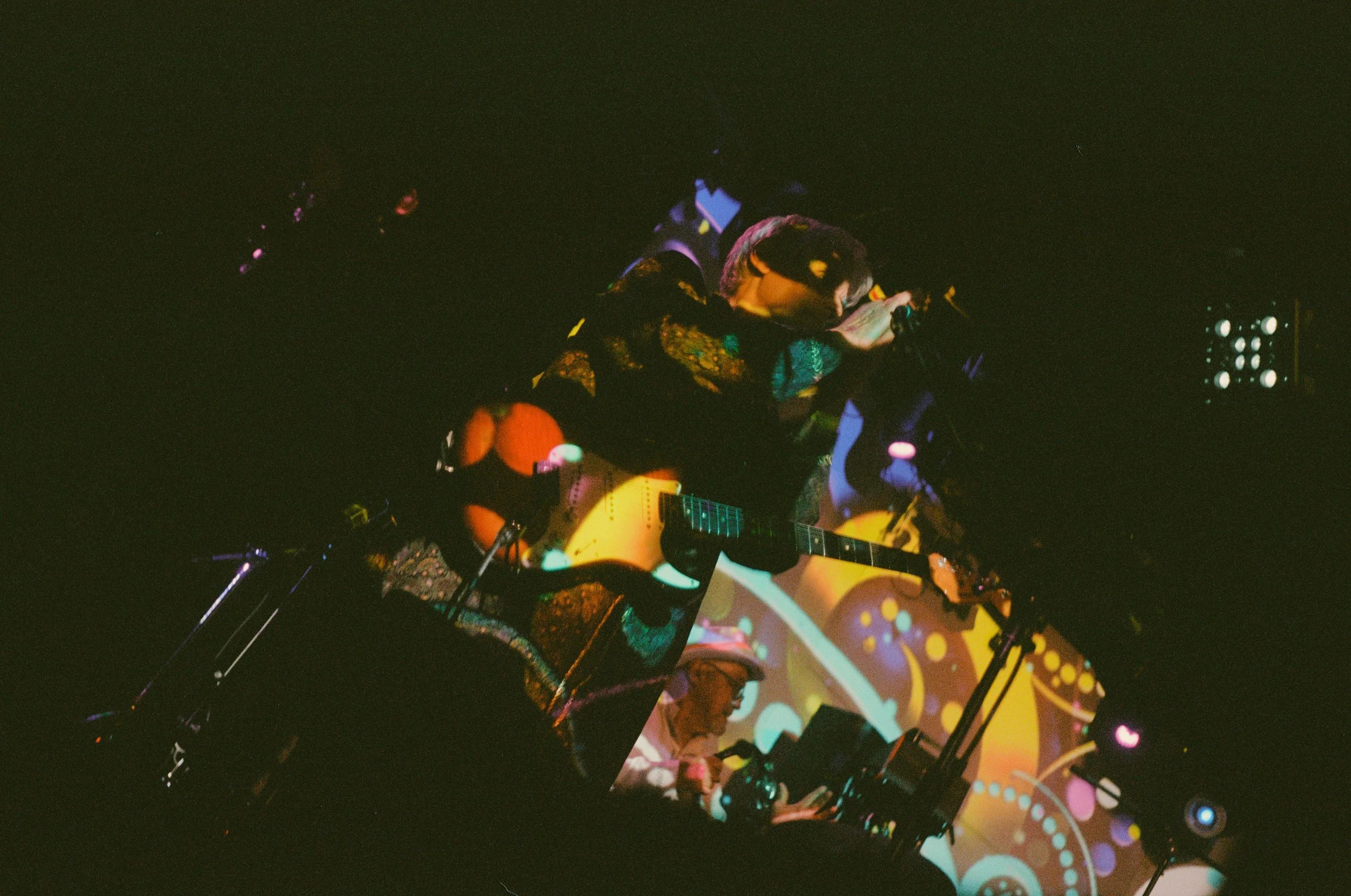
Steve on flute & harmonica with Strawberry Alarm Clock
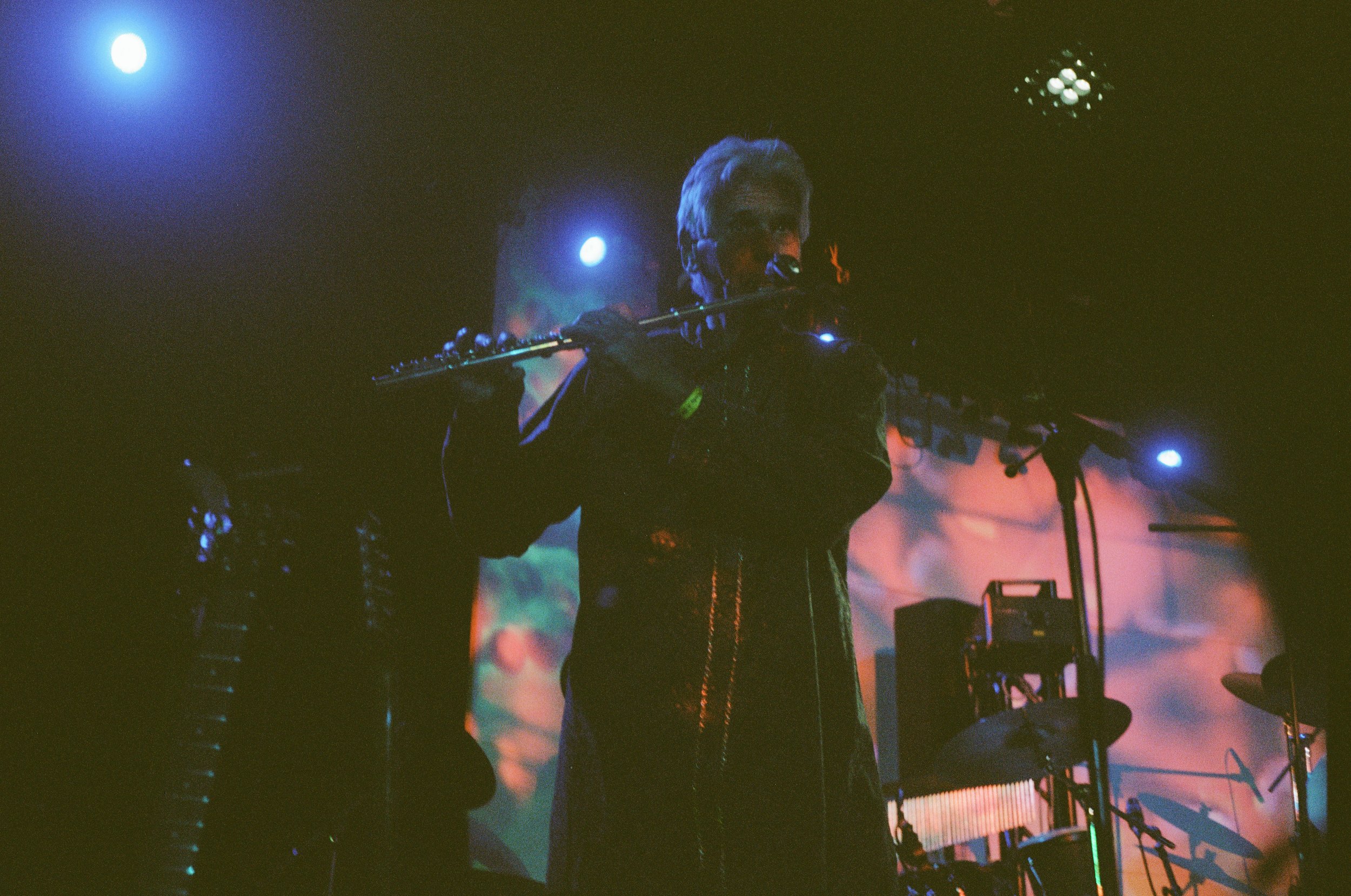
@ Whisky-a-Go-Go, 11/2021
Gabi Chesnet
I know that as a kid, when I was 15, starting on guitar, bass, drums, I would've just lost it if I got this opportunity! I probably would've been too nervous to go on stage.
Steve Bartek
It was a period of time... The band actually opened for CTA. CTA became Chicago; before they started calling themselves Chicago, it was Chicago Transit Authority. They dropped the other two. We opened, they were next, then Love, and then Procol Harum, at this big concert. It was at a period of time where I was thrown into these situations where I was playing with all these people that... We did the Whiskey, opening for Chicago once, and we opened for a band called Ten Years After. The guitar player was a flash guitar player and he'd been at Woodstock. So at the moment, it was kind of a big thing. At that period in time, I had some good experiences of playing on stage, culminating with being able to play with Love as a singular musician, not as a band - but that's being onstage with them playing.
My second story, anecdote, is a little more tense. Danny had worked on Midnight Run, a movie. Danny had written this piano piece. It's kind of the one kind of touching emotional scene in the middle of it, there's a little kid. He had done it free time, and the director liked it. Danny went back because we were going to add strings, so you can't just... So he rewrote it, organize it so that I could do something with strings. And the director hated it. So it had to go back to the original improvisation, and I had to find out a way to get the strings to play with that improvisation. Okay, so this is like, I thought I had it worked out - but I had too many different tempos to actually be able to do it. I was not experienced enough at that point, I think, to realize this, and I was conducting. I was conducting the string section trying to record to this piano piece. And I was falling apart. It wasn't working, it was taking too long, it was costing money.
The bass player, Bill Nightlinger (?). I'll never thank him enough. He passed away last year also. He came up to me and said-- I'll preface that my outlook on those situations, I was terrified every time I was in front of the best musicians in the world playing stuff that I put on paper, waiting for the imposter syndrome to call me out and say "you're stupid" or "don't do that, you can't write that". That kind of stuff. Bill took me aside and said, "We're all here to make the music work. We're here to make you look good. We're here." I forget exactly how he worded it. But it was like, we're all here for that. That's not me telling them what to do and them getting back. We're here for a purpose. It changed my outlook on being in the recording studio. I was excited, but I was no longer terrified of the musicians. Which is, you know, the last thing I should be. The musicians were on my side.
Gabi Chesnet
Was it terror or self consciousness?
Steve Bartek
It was a little both. I mean, one, the imposter - I'm not worthy to be here doing this with these people. And the other was that they don't want me to succeed.
Gabi Chesnet
Because they have succeeded.
Steve Bartek
"They succeeded, and what am I doing there?", you know, "Who am I?", basically telling them how this should go. So that moment, changed my entire outlook from then on. I really thanked Bill Nightlinger for that. When he retired, it was really wonderful. He gave me an amplifier - he took over the bass job from a famous bass player for the Carpenters, Karen Carpenter. The previous bass player gave him this amplifier, a Fender Concert, brown. It had particularly big, special speakers in it, but he gave it to Bill so that it would match the tone that he'd been doing previously, so that when he took over the chair, it'd be the same sound that they've been used to. So when Bill retired, he gave it to me. He said he wanted to give it to somebody who could use it and make it sound. That flabbergasted me. It's the best amplifier I have out there. I use it whenever I record.
Gabi Chesnet
It's comforting to hear that older musicians that we look up to also have struggled with feeling intimidated, or like they weren't good enough - well, they were. But I assume with musicians, it can be difficult to think, "Okay, let's get up on this stage", or, "Okay, let's go in the studio and have this take done right". [SB: Yeah.] We're all in this together.
Steve Bartek
Yeah. No, I mean, that's what Bill did for me. It made me feel that way again. I mean, when you're going with the band, then the four of you are like, "We're in this together", and they're just miking us and stuff. When you're going in by yourself to play for somebody... That's a whole other story.
Gabi Chesnet
Do you feel like that when producing ?
Steve Bartek
As a producer? [GC: You've produced.] I have. I'm not so sure I'm a very good producer. Actually, last year I did a thing with this woman, Sangeeta [Kaur]. She's a new wave singer. She's opera trained and has that kind of voice. I got pulled in - it was her doing songs by Jon Anderson from Yes. Ostensibly, the three of us were producing together. It ended up in a very tense situation between what I was doing and what Jon wanted, because Jon didn't tell me what he wanted until after a lot of work had been done.
It's one of those... [TS: Communication.] Yeah, communication. And I was probably guilty too, because he was scary and I probably didn't reach out to him enough. But it ended up - we did mostly what I had done, and in the studio is when it's really fun, to lead the players to express what you think you want to get out of the music. Even working with the singer was a joy. She's an opera singer. So I opened up and repeated some stuff to give her a place to just... And she did, and it came out great. I edited something together. I was happy, and she was happy. So there are moments of production that you feel like you have done something, as opposed to, you know, just getting it on tape.
Gabi Chesnet
The studio is a great place to experiment and play. I mean, when the deadline isn't too close.
Steve Bartek
Right. But as a producer, you're trying to make the artist - with a capital A - feel like they're getting what they want out of it, so that they are expressing themselves properly as opposed to telling them what to do.
Gabi Chesnet
Yes, some producers are really into the whole "telling them what to do" thing.
Steve Bartek
We had a mix producer on a Boingo album, whose name I won't say, but we came in and he had all his presets. So it wasn't like he was looking at our music as something unique. He made it fit into his his way of working, which in some level, if you hire a producer who does this sound, you're hiring him to get that sound for you. That's not why we hired him, but that's how he worked. We left that album going, "Well... We were just a preset".
Gabi Chesnet
Speaking of that whole time back then, there is a lot of outtakes. Is there anything that you wish would have made it?
Steve Bartek
There's one that I'd wished we put on, I forget what album was, maybe the last one; it's called Remember my Name. John Avila has a great bass solo. [GC: Yeah, he told us that.] Yeah, it's a shame that one didn't get put out.
Gabi Chesnet
Is it true that Change has a 30-minute version?
Steve Bartek
How long was it on the record? [GC: I don't remember.] It's pretty long on the record. But yeah, originally we were jamming about 30 minutes and Danny edited together with it with the engineer.
Gabi Chesnet
Ah, so it's lost forever.
Steve Bartek
Probably, yeah. The original long one. I don't remember hearing anything longer than what was on the record that was mixed. [GC: There's people out there really hunting for stuff.] I don't think that physically exists. There may be rough mixes of it somewhere, but it wouldn't be the song, it would be like the rhythm section, because Danny wrote some of the song over what we had jammed.
That particular album, that was one of his... There was like two or three songs that we just did that way. Wolves... [GC: Wolverine?] No, Wolverine's an older song. [TS: Pedestrian Wolves.] Yeah, Pedestrian Wolves was that. We jammed, we did a bunch of stuff, and then Danny wrote and put his vocal on top of it. I forget what the question was! (Laughs) I forget what we started with.
Gabi Chesnet
I told you there's no question! Is there any of these songs whose reception you were surprised by, the audience?
Steve Bartek
I can't say that when we did new songs, that the reception was ever stellar. You know, it's just like, you go back to the song that you played last year, and they know it, remembered it and fine - but the song that you're playing this year, usually doesn't get that. After a couple of those, you're just used to it. You assume that the new stuff is going to take time to set up. The last album got some pushback, because it was more guitar-y, more open, from some of the fans.
Gabi Chesnet
But did you have fun with it, if it was more guitar-y?
Steve Bartek
Oh, yeah, of course! And we had Warren Fitzgerald. He came to the show the other day, it was great to see him. He came Friday, I think.
Tiyanée Stevens
Since we've been here, we've lost all idea of time.
Steve Bartek
Oh, yeah. (Laughs) You keep showing up to all these shows! Friday was with Danny's show. [GC: Oh, we were there.] Yeah, he came backstage and we had a nice, long conversation. He's crazy. He's a bit crazy - if you follow his career backwards, you'll you'll find all kinds of crazy stuff. But he was the spark the band needed. He was a joy to play with. Because he was, much like Ira's different than me, he was different than me.
Gabi Chesnet
He was bringing what you needed at the time. [SB: Yeah.] But if we go way back again, there's a picture I saw where you're playing with Lori Lieberman. Do you remember that?
Steve Bartek
Yes! That was my first tour. Lori Lieberman was being managed by Gimbel and Fox. Norman Gimbel wrote the lyrics to Girl from Ipanema, the English lyrics. He was a lyric writer. Gimbel and Fox wrote Killing Me Softly for Lori. Lori had gone and seen Don McLean at a club and had this set of ideas. They took them and turned it into Killing Me Softly, and then she actually recorded it before Roberta Flack. I forget how I got the gig. It was just me and Lori and a bass player, Dominic Genova, wonderful bass player. I must have auditioned and they hired me. We went on a little tour of the East coast. It was the first time I'd ever been on a tour, away from home with musicians. She'd go out to lunch, come to our soundcheck and "Oh, I saved this sandwich for you".
Gabi Chesnet
Aww, that's sweet.
Steve Bartek
(Laughs) But kind of weird. You know, it was nice. I think she didn't like the sandwich! That was the feeling I got, but she was wonderful to work with.
Gabi Chesnet
You were really young, like straight out of college.
Steve Bartek
Yeah, it was just out of college. So I was maybe 18, 19 by then. [GC: You had the big beard.] I did. That was a nice tour. I got to meet Fred Tackett, who ended up replacing Lowell George. So I got to meet some other successful musicians I liked. Lori Lieberman was a great little tour. She even gave me a solo. I used my guitar that I bought to look and sound like Django Reinhardt. I pulled it out on one song, the Epiphone Emperor, and I got to play. She gave me one moment for a solo, which is... When someone comes to see a folk singer, they don't want to hear the guitar player.
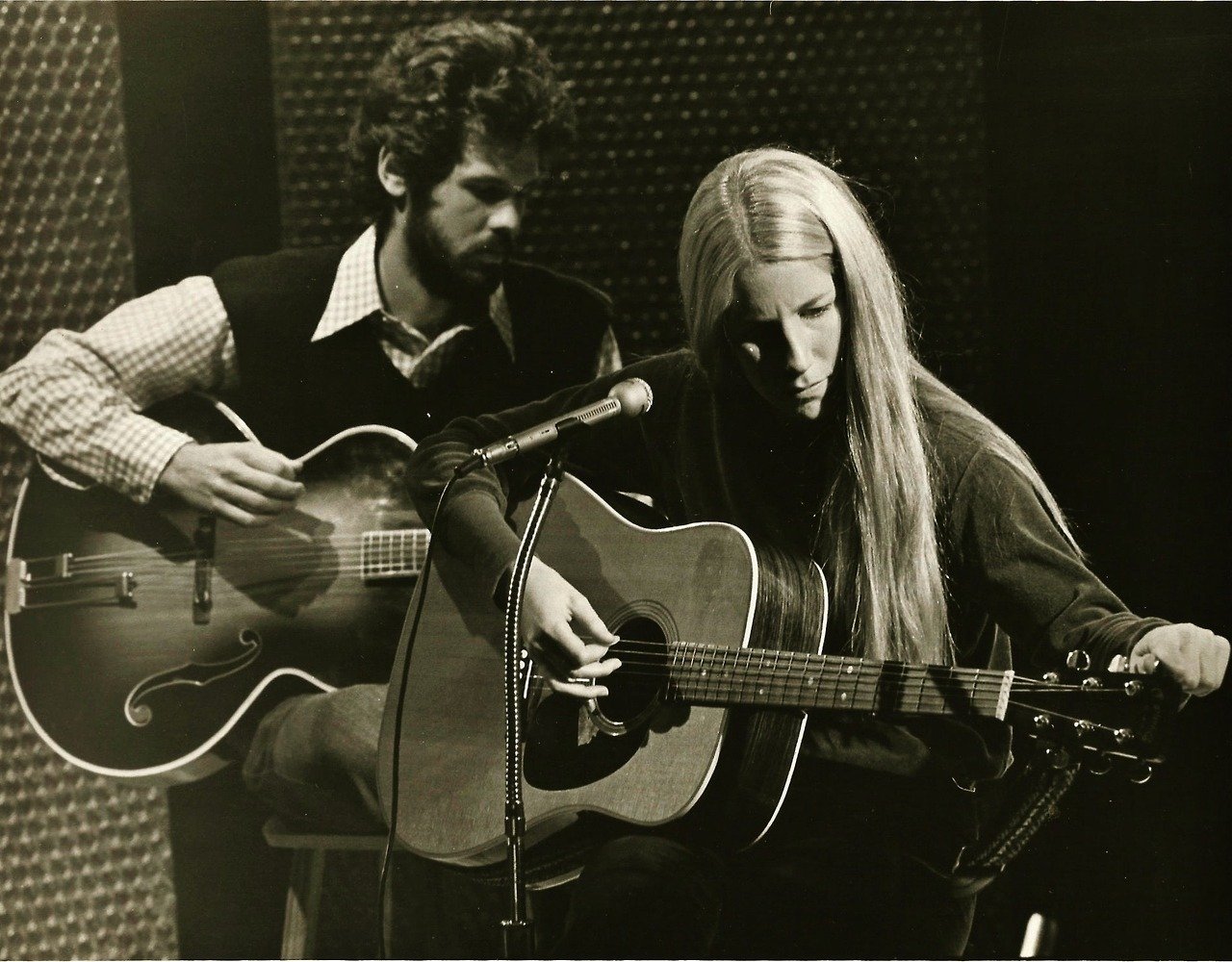
Steve and Lori Lieberman, c. 1972
Gabi Chesnet
You talked a lot about orchestrating and whatnot. But you've composed as well.
Steve Bartek
I have had the opportunity, and I took it when it came. The very first one was a movie called The Chair. No, Guilty as Charged, it originally was named The Chair. They paid me enough for me to buy a synthesizer that had string sounds, so I could write orchestra parts. It was my first. I was terrified, you know, having to do it. But the best thing is that they didn't have much budget, but they found the budget to hire an orchestra for me. So yeah, I made no money. But we got an orchestra to play the music. This is more of an anecdote. They couldn't do it with the union here. So it was in Seattle, Seattle was kind of the alternate place, because they have an alternate union. They use their performance union for recordings. We're recording with the Seattle Symphony, basically. It was at the Opera House, and we're supposed to be recording in the room. But what happened is that the schedule changed, and it ended up in their rehearsal room, which didn't sound that good. It was just a big rehearsal room.
So I get there. I hired a conductor because I was thinking I had to be the producer, I had to be paying attention in the booth. They had to bring in a recording studio, basically. They had to bring in a board and bring in all the mics and all the cables, and they forgot half the stuff and had to go back to Tacoma. So for the first 4 hours, we just rehearsed. Luckily, the conductor said, "Okay, well, let's just blow this off. Let's rehearse everything". The next 4 hours went really quickly. That's what gave me a taste for, "Yes, I can do it, and I enjoy it". The thing that was easy on that was my interaction with the director, he didn't have any money to go back and change the film. So when you get to the point where the film is changing, or the director is changing what they want you to do - for instance, Desperate Housewives.
I was hired because I was bringing an orchestral sensibility, by the guy who wrote it, to do the first episode. Ostensibly, I was supposed to do them all, but they fired me after the second episode... and you'll see why. There were 6 other producers, I think, at least 3 or 4 of them showed up at my presentations, and they all wanted something different. So for a while, I was chasing all these different things, until my music editor stood up for me and said, "One of you". It ended up [being] the writer who hired me in the first place. I followed him. I followed what his sensibilities was, he wanted it to be orchestral. The other guy wanted it to be pizzicato strings and vibraphones, which is where it ended up after I was fired. I think inbetween me and the guy they got to do it - [he] was one of the producer's buddies, he'd done shows and did exactly what he had wanted. Inbetween, I think Stewart Copeland did one episode. So they were going down the line until they got there, they got to the guy who ended up being the main producer, his buddy.
But the first one was like an awful battle to decide who's in charge, and that I'm not very good at. I was completely traumatized. Actually, I was going to acupuncture for my knee. I had a knee injury at one point, and my wife made me ask about how tense I was. So the guy had put needles every place I would never think of letting anybody put a needle in. (Laughs) But afterwards, I was very calm. So I went to this meeting with all these people and calmly just took it, and made it through without completely falling apart. But that's the reason why I didn't pursue it as actively as I could. I'm just not cut out for that kind of interaction. Danny is great at it. It hurts him too, but he knows how to handle situations like that better.
Gabi Chesnet
Well, everybody's got a role that they prefer. That's okay, and maybe not a matter of being more fulfilled or not. You can feel fulfilled by composing, it's just not your thing.
Steve Bartek
If it was something that I felt I had to do - well, I'm forcing myself now, but if it was something I felt compelled to do every day I'd be doing it.
Gabi Chesnet
That goes back to what you said, you do music because you feel pushed, that you have to.
Steve Bartek
Actually, one of the mistakes I made - I did Cabin Boy, right when they were doing The Nightmare Before Christmas. The Nightmare Before Christmas was like a 3-year process, we'd go in and record the vocals, the songs would have to change the fit the animation as they were finishing the animation. We finally get down to recording the score, and I was in the middle of doing Cabin Boy. So I managed to orchestrate all the songs, but Mark McKenzie, who had to work on this great orchestra - great composer - did all the background music in Nightmare. So my choice of Cabin Boy, which nobody remembers, was... (Laughs) But you know, I got to write music.
Gabi Chesnet
I mean, it was only released in the US because that's unheard of in France.
Steve Bartek
Yeah, not something you've ever heard of.
Gabi Chesnet
I did grow up with some of this stuff - we're young. Nightmare Before Christmas is one of the things - my sister is in her late 30's, she's the one who introduced me to it and it was my musical awakening when I was probably like 5 or 6. [SB: That's heartening.] That was marking. When you have a first musical memory, which is the thing that I asked, it kind of sticks with you and you tend to reproduce the things that you hear, these musical patterns.
Steve Bartek
Yeah, it stays in the back of your head, because you're imprinted.
Gabi Chesnet
I remember actually, my dad asked me, "Would you like the soundtrack?" because I watched the movie a lot when I was little. And I would never shut up in the car, except when he put this on.
Steve Bartek
Oh, okay, so it had a purpose for him. (Laughs)
Gabi Chesnet
He would probably thank you.
Tiyanée Stevens
Do you want some easy tidbit questions? [SB: (Laughs) Sure.] Okay. The tiny ties?
Steve Bartek
They're practical. Back in Boingo, you know, skinny ties was what you did in the 80's. A period of time, we had suits and ties, but the tie would fall onto the guitar. So I got kids' ties instead, and no problem! That's the only reason.
Gabi Chesnet
That's literally the only reason?
Steve Bartek
I liked them after a while, so yeah, I became attached to wearing them. But the reason I even did it was because of this flopping in the strings. [GC: That's smart.] (Laughs) It's practical. Smart... Eh, not so much.
Tiyanée Stevens
I've got a question about singing. You did do backing vocals in Boingo, right? [SB: Yeah.] You don't do those anymore!
Steve Bartek
No, I don't. In that 15-year period where I wasn't really playing guitar, I just kind of stopped singing. I'm trying to incorporate it. The last Oingo Boingo Former Members gig, actually, Brandon [McCreary] came around and let me sing with him, and I sang some other stuff. But my voice is not in good shape. I also have a thyroid problem, and I find that my hearing and voice changed. I don't hear my voice exactly the same way, and I have no real medical reason to say that.
But that's the other thing, I started trying to just force myself to sing every day. Just because it's so good for you. I mean, my mom lived with us for years, and she died when she was 93. But the last few years she couldn't swallow, and part of it was because she'd stopped talking and all the muscles kind of go. So from what I read - and you can feel it - you feel so much better after you sing and it's actually physically good for you.
Gabi Chesnet
It's physically good, and it's therapeutic. [SB: Oh, yeah.] I do think I recall a video where you were singing a Beatles song - I could be mistaken - with JackiO.
Steve Bartek
Oh God, there's a video of that?! Yeah, I'd done a semi-arrangement of I'm Only Sleeping. I listened back to one of those, like, "Agh, I shouldn't be doing this". (Laughs) When I heard my voice back, it was just like, "Okay"...
Tiyanée Stevens
This is something that we've been meaning to ask the other members of JackiO but we keep forgetting. Do you know the origin of the name JackiO?
Steve Bartek
It's not great. We had a song called Get Back Jack. We had to come up with a name for the band, we all brought in names and most of them were really stinky. Not very, not very. And David Raven says, "How about JackiO"? And because we had just spent an hour or so just going through names, it was like, "Okay"!
I had met him - John Avila brought me in and brought in John Hernandez to sit in with Mutator. They were playing in Hollywood at some place, you know about Mutator? With the dancers and the contortionists, all that stuff. David was there. He was kind of one of the main guys, with a mohawk. Playing standing up. It was just like- He was really, really nice, but I was still completely scared of him. (Laughs) Just, "What have I got myself into? Okay..."
Gabi Chesnet
He's not really intimidating as he is interesting.
Steve Bartek
Yeah, no, the intimidation was the situation. And what the show is putting on was like, "Okay, what am I doing here?", but he himself was very welcoming, and helpful as I remember backstage. Then I didn't see him for a long time, and he showed up with JackiO. JackiO - Ira was the instigator for pulling all those people, he's probably told the story, so...
Gabi Chesnet
Not really a bandleader, he doesn't like that term. But he...
Steve Bartek
He motivates. He gets things moving, and when he can't do that he gets really frustrated, rightfully so. That's actually how JackiO- what happened was that he had a band called the Corvairs, that just he couldn't get everybody interested as much as he was to keep it going, to get it going, to do things differently, to do new stuff, they were all just doing gigs playing the same old tunes, unless he brought in new tunes. That was very frustrating for him. So when we started JackiO, everybody had some connection to everybody else in some way, and the first rehearsal was just kind of special. We all felt like it was gonna happen. It was his impetus that made the band go, and because everybody had something they could contribute. It wasn't all on his shoulders.
Tiyanée Stevens
It's a fun little band. It's like a melting pot of all of your guys' past bands. There's Food for Feet songs, there's Boingo songs, there's Mojo Monkeys songs.
Steve Bartek
We're not afraid to embrace the past.
Gabi Chesnet
(Laughs) It really looks like you're all having fun 24/7.
Steve Bartek
We are. I can't think about a dull moment when we play. I mean, it's a joy to look over to David and he does something, and I do something and he's doing something...
Tiyanée Stevens
It's fun seeing the little nonverbal conversations going on.
Steve Bartek
Yeah, that's the joy of that situation.
Gabi Chesnet
That happens with OBFM too. There's a lot of nonverbal going on. It's really fun to see the faces you're all making.
Steve Bartek
Yeah. OBFM - Mike, the other guitar player who wasn't an original member, I look to him, because he knows. He's the kind of musician that just knows lots of songs. So he knows those songs backwards and forwards better than I remember them. So if I have a question, I'm looking to him going "Okay, that's where we are, that's it". For me, he's the pillar of making sure the song goes where it's supposed to! (Laughs)
Gabi Chesnet
He can be the pillar and then you get to make all these new riffs.
Steve Bartek
Yeah, and he's responsive. If I go somewhere else, he's with me. So yeah, all those players are great.
Gabi Chesnet
There's a lot going on, on stage. I'm sorry for what Brandon puts you through. (Laughs)
Steve Bartek
The worst one was... (Laughs) I was lightly making fun of him by doing the hips [dance] and suddenly it's on it's on YouTube, it's a GIF. It's like, "Augh... I shouldn't do that".
Gabi Chesnet
No, you should. [TS: I love musicians in movement.] Yeah. It's something that we like to ask about, just the motion on stage and the way that different musicians approach motion and stage presence. Some are very static and not very interesting to look at, and others you can see have a whole thing going on.
Steve Bartek
It's funny because I always consider myself the static guy. [GC: No, you have a power stance.] With Boingo, particularly the last year. [TS: You had some fancy footwork.] I had a couple little moves and that lasted for the whole show. You know, so I do that once, I do this here. But I always felt tied to my pedalboard. With Boingo, I had to have a delay here and turn it off here. I had to turn this on here so that every section, the guitar was doing it was supposed to. So I had those responsibilities and I couldn't go dancing like other people in the band.
Gabi Chesnet
But you did! [SB: I tried to.] There's one song you dance. I can't remember the one, but with John, you're all in sync.
Steve Bartek
Oh, yeah, Wild Sex, we always did that. I got kicked out... No, I got reprimanded, I wasn't kicked out yet, I quit later. A band out of high school, in college, where the keyboard player wanted it to be a heavy, heavy band. My friend George from Strawberry Alarm Clock was playing bass, and I got us to start doing dance steps because... Some of the songs have a silly feel to them. And I got yelled at. (Laughs) He says, "You don't do that, this is a heavy band!", you know, this is the 70's.
Gabi Chesnet
Is that why you don't do, on stage, the Dead Man's Party dance anymore?
Steve Bartek
If you look, the only time I really did that dance with them was on Back to School, I think. I used to start it, and then I'd walk off because I couldn't keep playing. John Avila had it down to do that and Danny wasn't really playing when he started doing that. So there's no conscious reason why I haven't been doing it. Laura [Engel] coached us and made me and the bass player try to do it at the stadium on Halloween night. [GC: We've heard about Laura.] So for like four beats, I did that, and I got lost after that anyway.
Tiyanée Stevens
You had a gorgeous guitar for the Nightmare show.
Steve Bartek
Oh! You'll have to come in and see my guitar collection.
Gabi Chesnet
Yeah, I was gonna ask about guitars and gear.
Steve Bartek
That was my Gretsch. It's not a Duo Sonic or a Duo Jet, but it's a champagne custom finish I bought because I had been under so much pressure during Spiderman 2. It's my Spiderman 2 guitar. Spiderman 2 was kind of, as far as the film, kind of a mess. The director disappeared while recording that score, and came back and wanted changes. And Danny was going off to another film afterwards, so he couldn't do everything the director wanted. Besides it being a disrespectful situation for the director not to have been there while recording, because half the recording process you make sure you're doing what works for the director. Danny was off to the next project, I was left to try to clean up some of the stuff that the director wanted. And it was just very stressful.
But there was this guitar that was hanging at the store, Truetone Guitars. It'd been there for a year, I'd been eyeing it. I go, "I really should have a Gretsch". [TS: I deserve a treat.] So this time it's like, I'm driving right there. If that guitar is still on the wall, it's mine. That's where that one came from. [GC: I'd never seen it before.] I don't think I've ever used in public. I've recorded, I played the Jerry Casale song mostly on that guitar. It actually has a good rock'n'roll sound.
Gabi Chesnet
Congrats on that, that was a really amazing track.
Tiyanée Stevens
We can end it off with either, what's spinning in the Bartek house, what have you been listening to lately, and advice to young musicians?
Steve Bartek
Oh, boy... Those are both very large subjects. Most of my listening these days have been in the car and it's always on shuffle.
Tiyanée Stevens
Are you a radio guy, or do you use streaming services?
Steve Bartek
Actually, I'm old school. I have an iTunes with a bunch of songs and things that I buy. It kind of like goes through that, so it's stuff I had picked. But in no particular order. Like, there was a band from South Africa called WITCH that showed up. It surprised me, this was like from the late 60's, 70's. It was surprisingly like Tower of Power, kind of R&B but with an African sensibility. It's kind of cool!
I haven't aimed at things to listen to. What happens is I'll read a review, and I'll go listen to it, and I'll purchase it so I have it. So when it comes up I go "Oh, I remember that", or I go, "Why the hell did I buy that?" That's kind of how my listening goes. It's all over the place. That one was next to a classical string quartet piece. I can't pronounce the guy's name - Schnittke. Certain things excite you when they come on, and you bypass the ones that you go "Oh, why...". (Laughs) That was less than helpful, sorry.
Gabi Chesnet
Some people have trouble saying what they've been listening to lately. Even myself, I just put on whatever playlist is on and let myself find what's interesting.
Steve Bartek
Danny gets organized and he has playlists that he... "Oh, I've been listening to this playlist now". He has one for poignant music and stuff like that. I'm just not that...
Tiyanée Stevens
David's big on playlists. We had a big conversation about, I think we asked him if he'd ever thought about doing like radio work, and he said that yeah, that's basically how he thinks of his playlists.
Gabi Chesnet
We've been discovering lots of music thanks to him.
Just like that, is it true that there was going to be a music video for Who Do You Want To Be?
Steve Bartek
For some reason we filmed that at the country club, where we actually had to ask the audience to stay after the show, and we did Who Do You Want To Be. I think we did another song too. But yeah, ostensibly that's what that was for, but nothing ever happened with it. I don't remember ever seeing a video of it, or that they even finished. I forget who it was. Danny would remember-- no, he wouldn't remember either. Laura would remember.
Gabi Chesnet
Yeah, there's things we've heard about Laura and her antics. With the Frisbees.
Steve Bartek
Oh yeah! No, she was funny.
Tiyanée Stevens
Did you ever get hit?
Steve Bartek
No. I behaved. I was good. She was a Frisbee champ. She made the centerfold of the Frisbee magazine. For some reason I had saved it. I just sent it back to her last year, because I was going through all my stuff - pandemic, you go through all your stuff and it's like, "Oh, look at this!". She didn't have it, so I sent it to her.
Gabi Chesnet
A last question, you've probably been asked that a lot. Advice for young musicians?
Steve Bartek
Be prepared. Particularly these days, be prepared for every possibility. Don't say you don't need to know something because you're not going to use it right now. If you're obsessed with music, every little thing will come into play at some point. Goodness that I actually studied music, because out of college you kinda go, "What am I gonna do?", and I ended up playing casuals, nightclubs, and not using my education particularly. But when the opportunity came that Danny needed help with film, it was like, "Okay, I have the background, I can do that". And the same with styles, or I use the excuse for buying guitars. Be prepared for anything at any point, and be as prepared as you can in the music that you want to do. And sometimes in the music that you don't want to do, because sometimes that will influence what you do wanna do. No reason not to listen to Balinese gamelan because you're never going to play it, you listen to it because it's inspiring and can have meaning in your own performance or writing.
Advice... I mean, it's the obvious, don't give up. Everything may seem hard at first, but the more you do it, the easier it gets. As far as business goes, I don't understand how anybody these days can be inspired to become a musician for a living. Because it's very difficult. You have to do everything. It's not like you want to, but you have to be able to do everything. You have to be able to record yourself, promote yourself, write, sing and you have to do everything to be able to be heard by anyone. In my day, I could play guitar and get away, you know. I could keep going.
Tiyanée Stevens
The industry has changed a lot that way. Technology and people - even young teenagers are able to record at home and just blast it on YouTube or whatever.
Steve Bartek
It's a double edged sword. That's great, but then it - this is not the right word to use - it kind of cheapens the market because there's so much. [TS: It gets lost.] Yeah, and in some ways that's okay. But then you end up with corporates, big acts that you have to get so many people behind them before anybody will hear them. [GC: And industry plants.] Yeah. So it's a different world than when I started.
Gabi Chesnet
Well, we're trying.
Steve Bartek
Yeah, I mean, doing interviews and having other sources of expression than just music. Even MTV, when that happened, suddenly you had to have a look, you couldn't just be a band doing good music that people hear on the radio, you have to sell yourself. That happened slowly, I blame it on MTV, but it just got accelerated. And then YouTube, and it's like everything- You can't have a song out without a video of some sort.
Gabi Chesnet
Yeah. It's all about the aesthetics. [SB: Yeah.] I mean, I started being a musician and then I went to music industry school. So I learned about the business and law and whatnot, and I was like, "Oh, I want to be a tour manager", and "I want to be a manager", and "I want to have a record label". I did that, and I was like, "Actually I wanna do media, I wanna do concert photography". All sorts of stuff. You diversify everything you do and you can't just do music. That also worries your mom now. Like, "Hey, you should think about doing something."
Steve Bartek
(Laughs) Something to fall back on.
Gabi Chesnet
Yeah, that's why I'll be certified as a French teacher, just so she can sleep at night.
Steve Bartek
Yeah. Well, for me, I was pre-med through high school, and then the first year of college, I didn't want to be cutting things up. So I changed to music, and my parents would keep saying, "You know, you should do something to fall back on". So I kept taking calculus and physics classes. I kind of enjoyed it. Just in case.
Gabi Chesnet
So you could count time signatures.
Steve Bartek
(Laughs) Exactly, that's how it ended up.
Gabi Chesnet
Thank you very much for being with us.
Steve Bartek
Oh, my pleasure. I hope any of its useful for you. Thanks.
Gabi Chesnet
It's not about being useful, it's about being interesting.
Steve Bartek
I guess that's kind of my bent right now, for myself, being useful to other people. It may have been why I said that.
Gabi Chesnet
Being useful is good, but being your own person and loving what you do for the sake of doing it is also good.
Steve Bartek
Knocking on wood for luck, that it keeps going.