Episode #4: John Avila
↓ English transcript ↓ | Traduction en français
John Avila: High-octane bass groovin’ - From Oingo Boingo to LACM
Gabi Chesnet
Welcome back to Musicians’ Teatime! I’m your host, Gabi Chesnet.
Cyd Levine
And I’m your co-host Cyd Levine. We’ve got another fascinating guest from Gabi’s little LA residency today, and another intrepid co-host; our good friend Tiya went out into the field with you to have tea with today’s subject, who is…
Gabi Chesnet
John Avila! He started in music very young, and has had a range of collaborators that will definitely surprise you. We visited with him at his very own studio, Brando’s Paradise, and we’re just so grateful to have had that insightful conversation with that now ever-so-active musician, producer, teacher, who first gained acclaim as a bass player, and has now branched off into so much more.
Cyd Levine
Between performing, recording, touring, teaching, he’s really done it all - and all with such high-octane energy. So let’s see what you guys had to say!
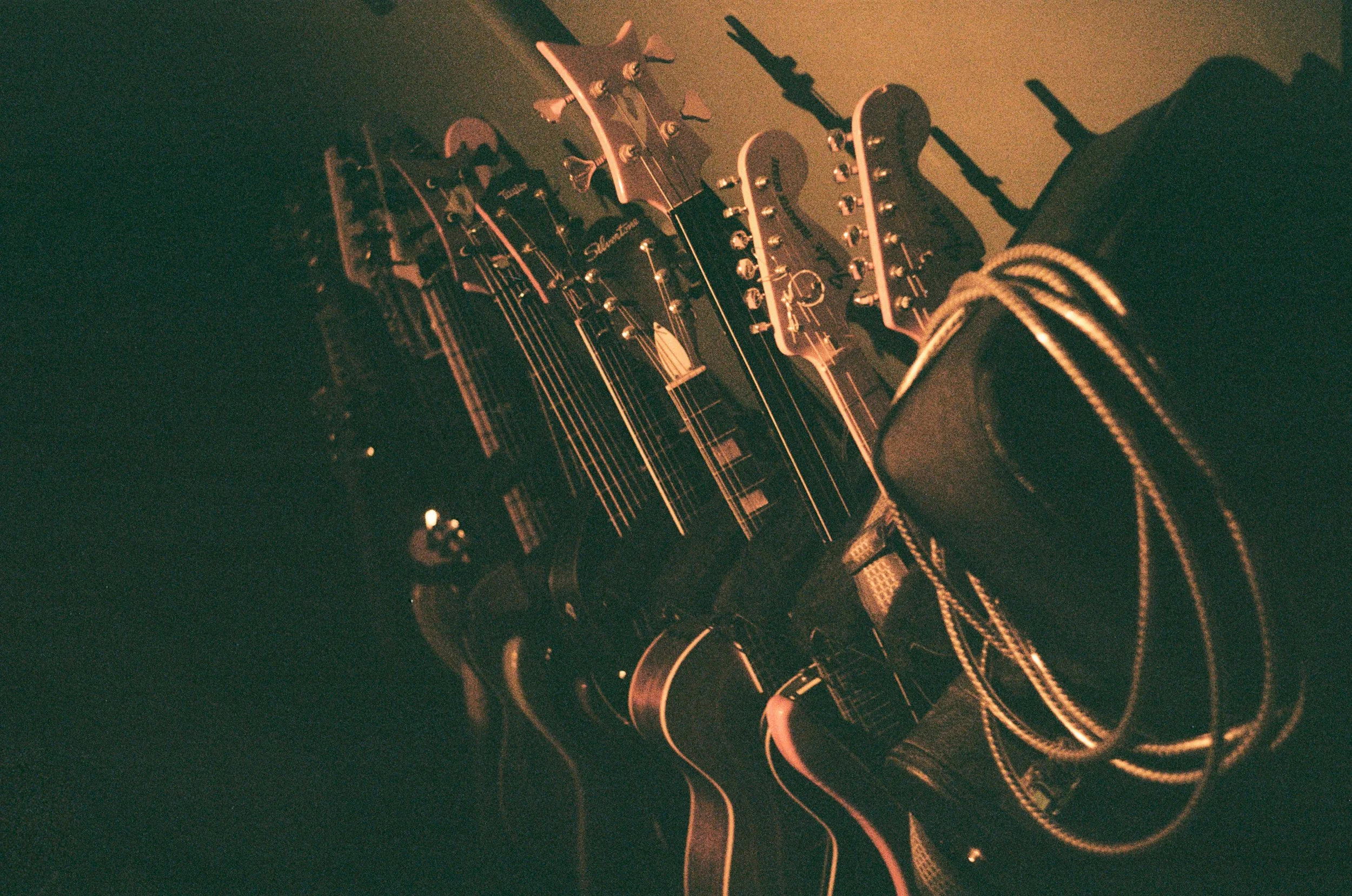
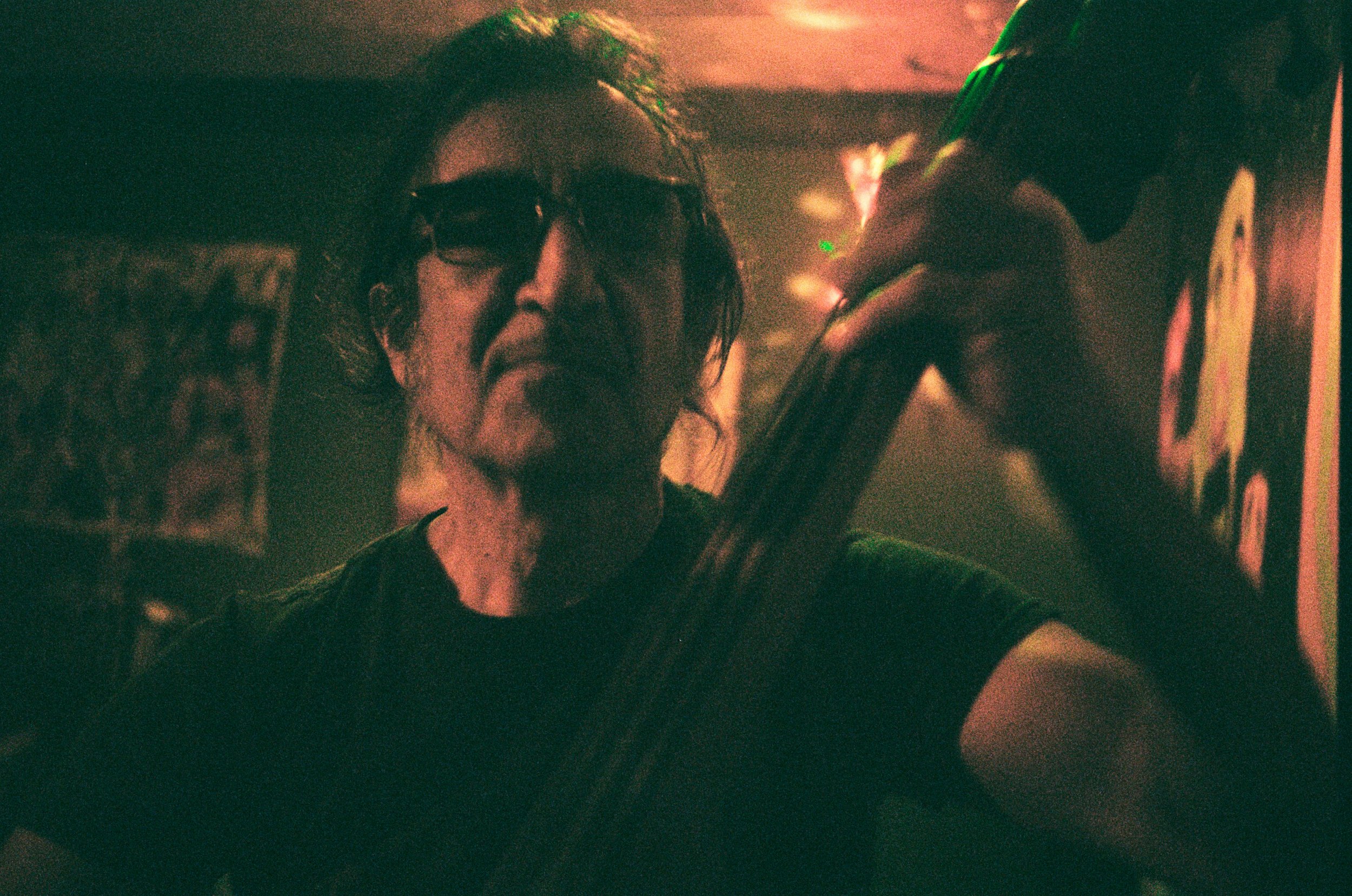
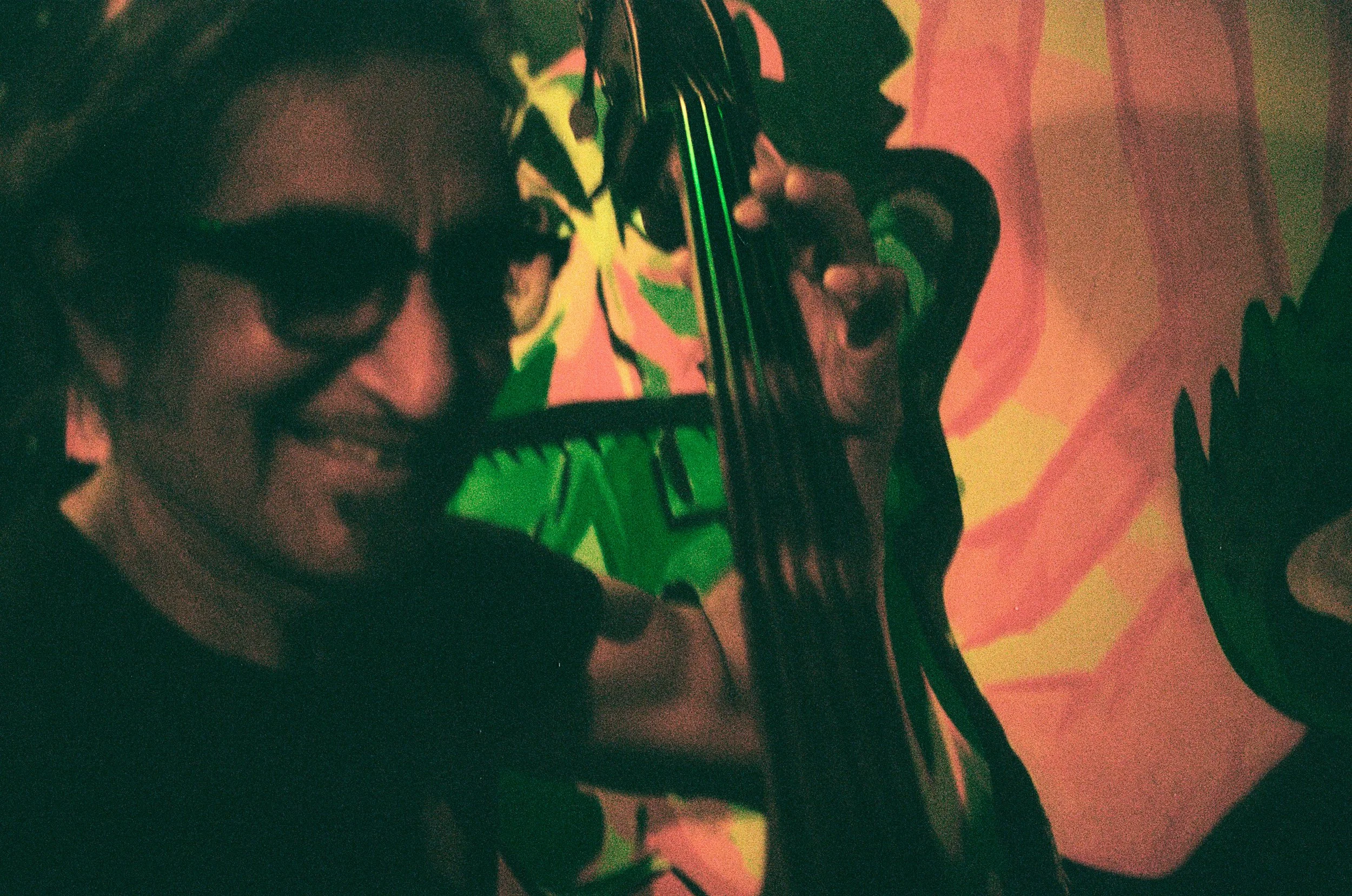
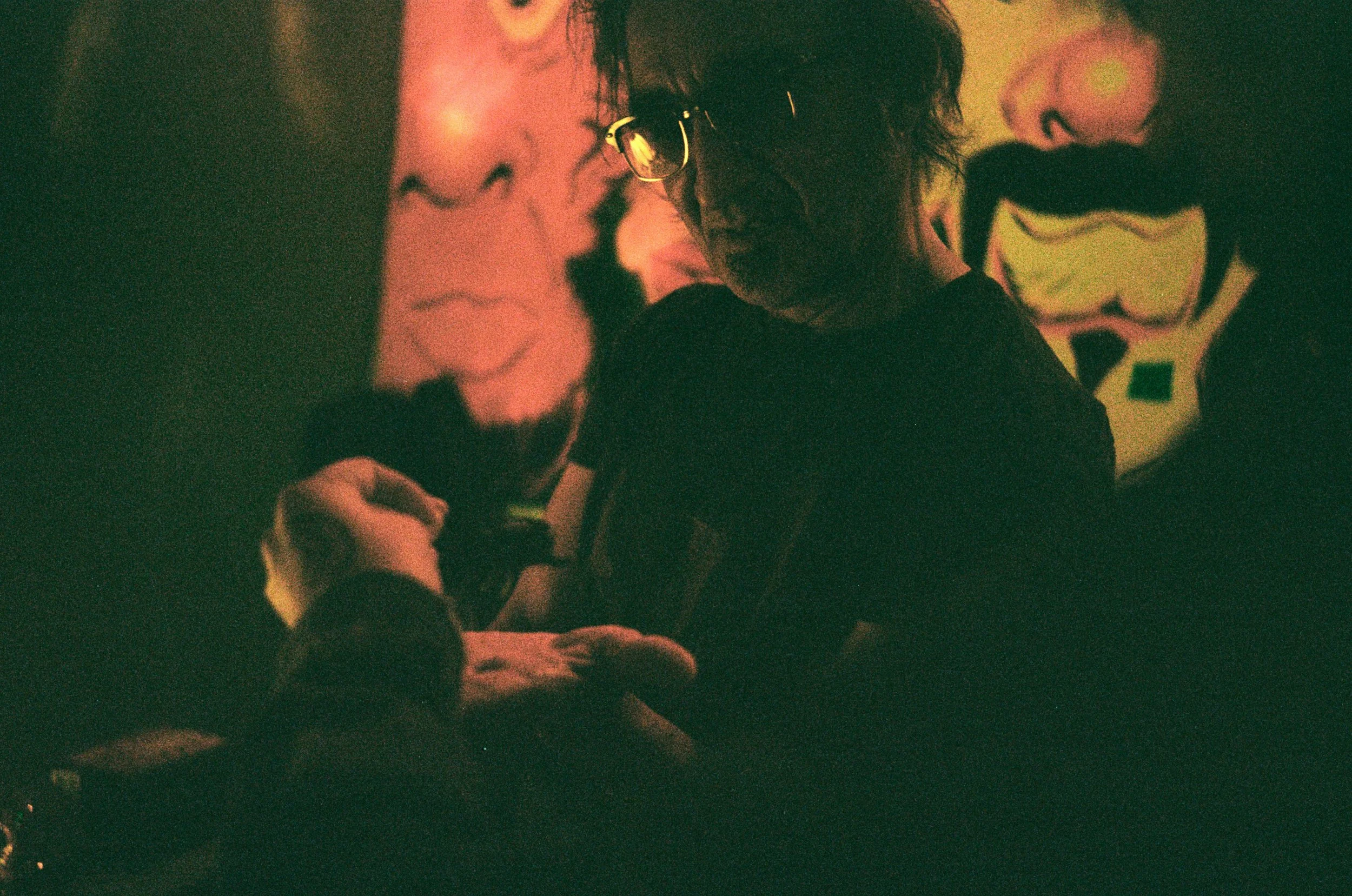
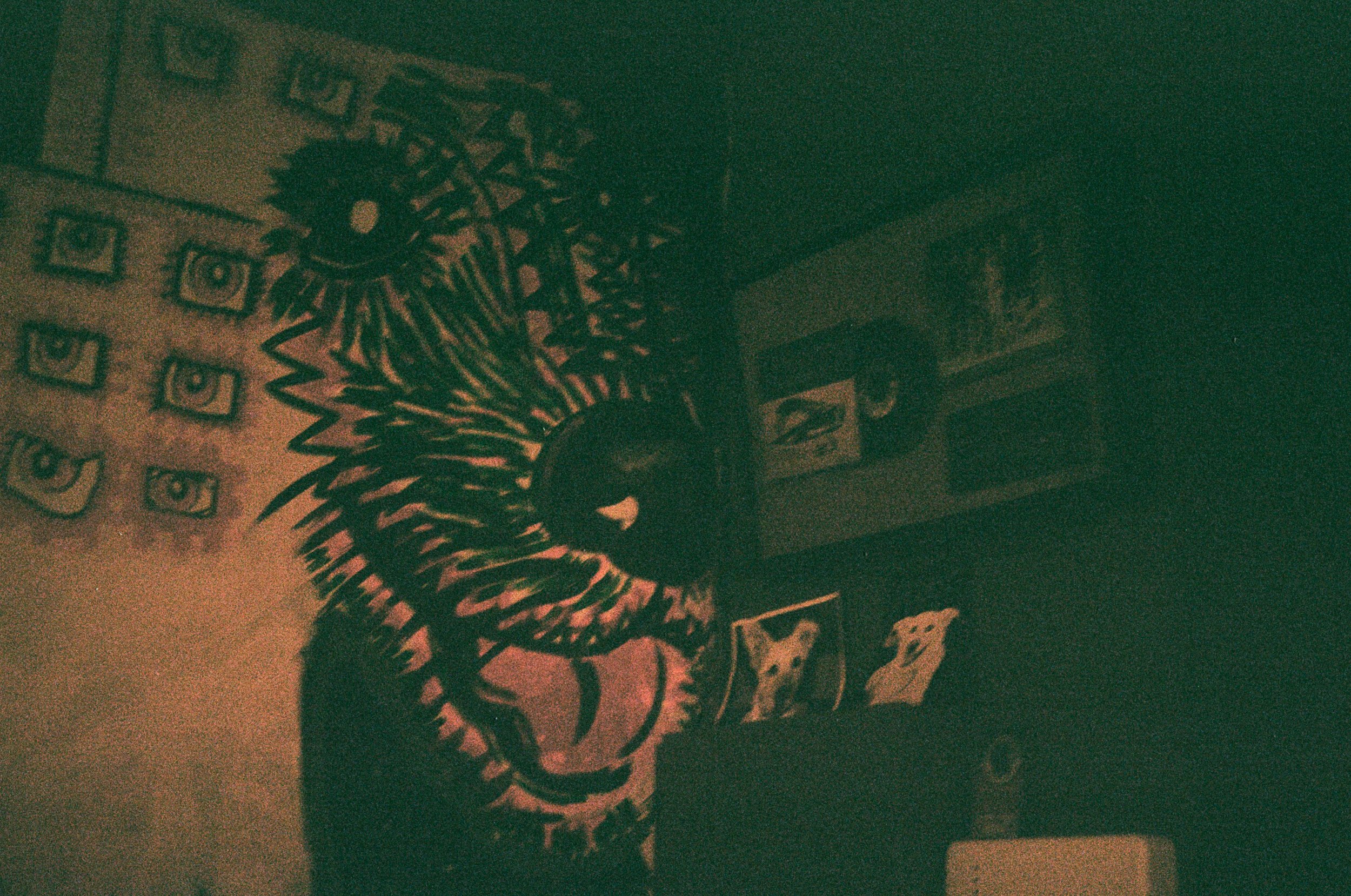
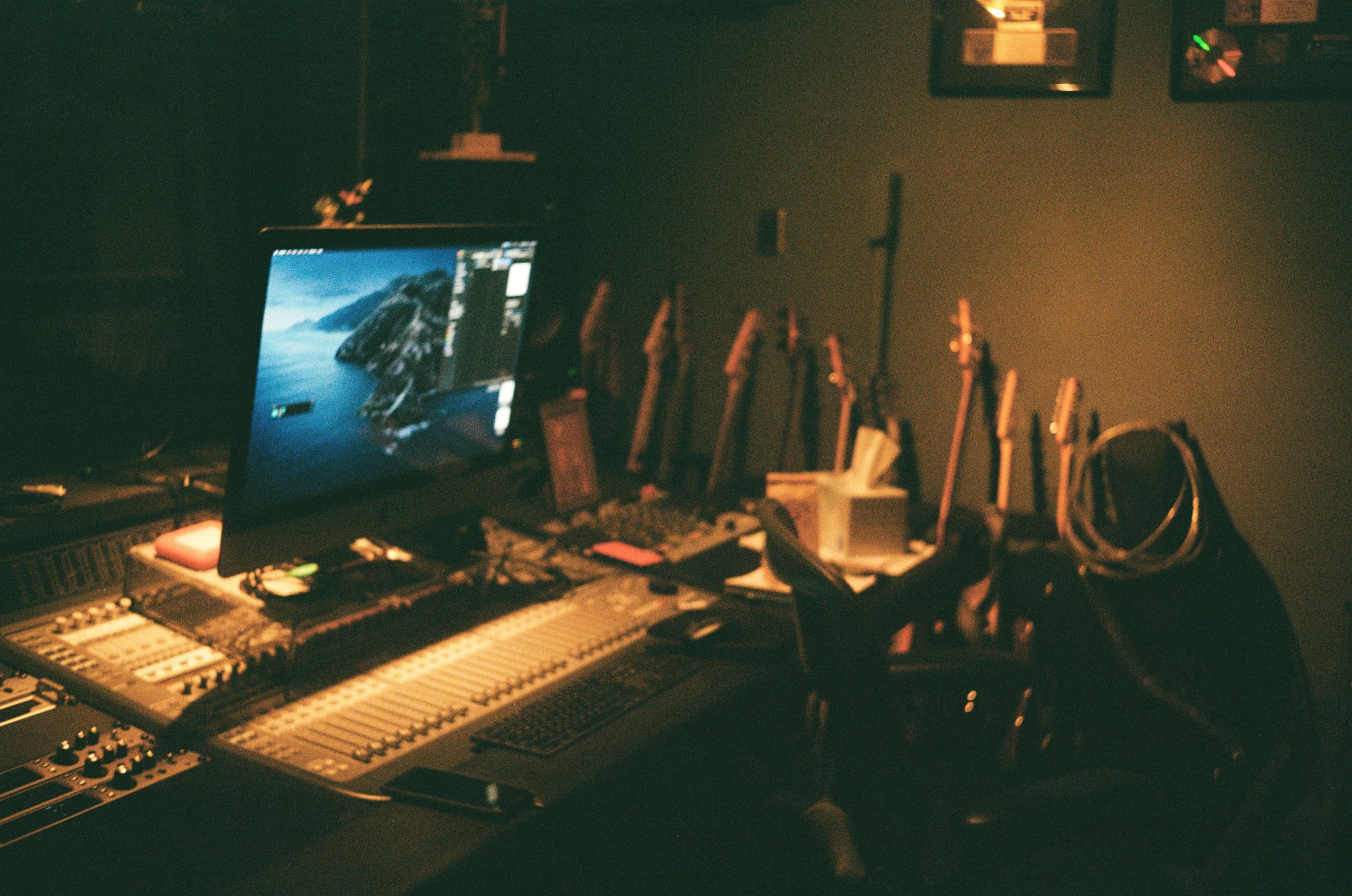
Brando’s Paradise - 35mm photos by Gabi Chesnet for AAR
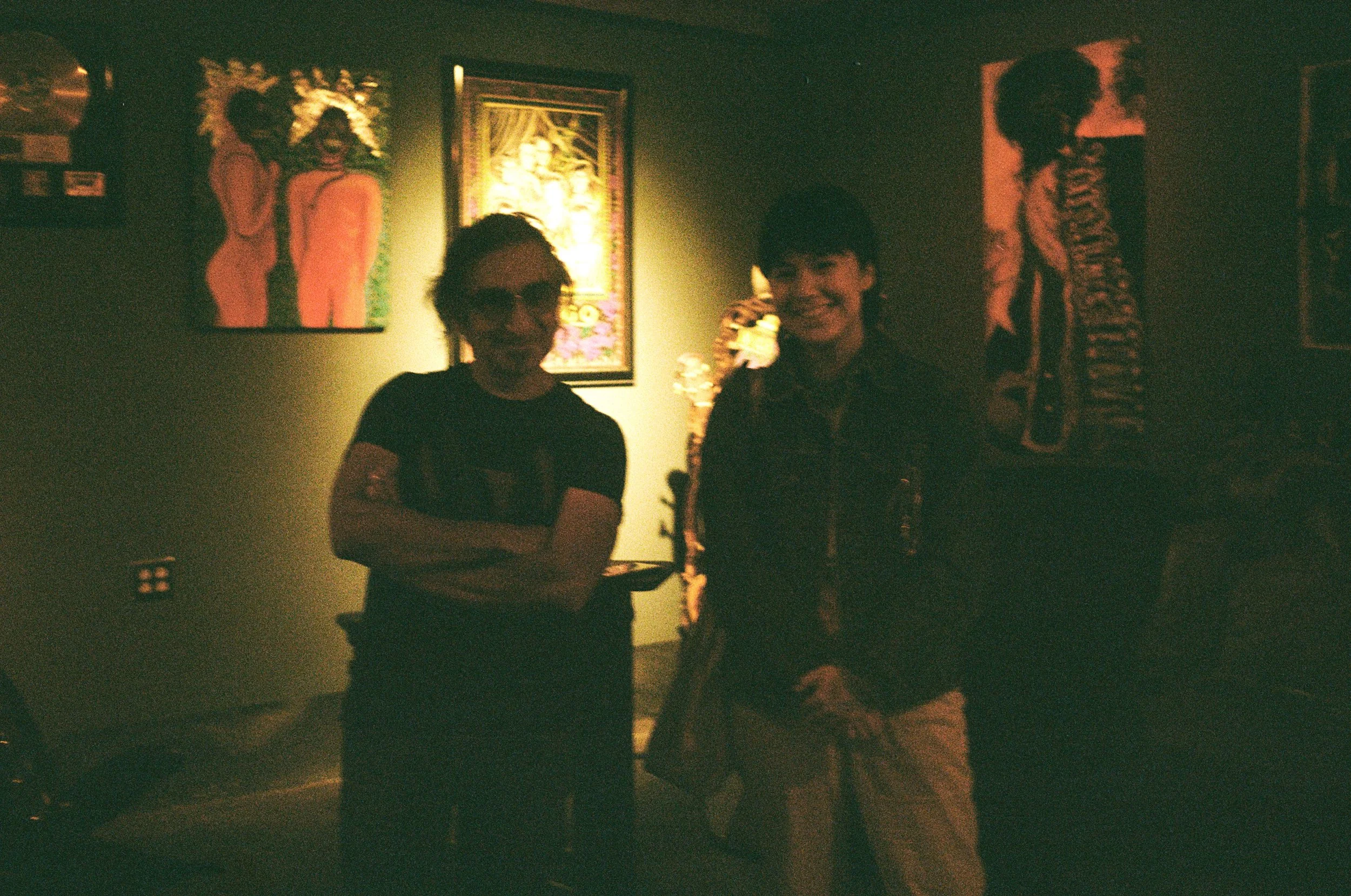
John and Tiyanée
John Avila
It is tea time right here at Brando's Paradise, and welcome to Brando's Paradise. Great to have you here. And thank you for having me!
Gabi Chesnet
And thanks to you, John. Well, first of all, the question that we ask everybody, and which is not always easy to answer, how would you define yourself? What are you, a musician? A producer?
John Avila
It depends on what decade you might have asked me that question. Right now, first of all, I am a musician, because if it wasn't for music, I wouldn't be doing what I do in all these other things that I do. But I love performing still, and that's originally that's what I did for the first 20 years of my career. [It] was just performing and touring. It was after that, that I got into production, and owning a studio, owning this place, Brando's Paradise. I got into producing bands, a lot of different bands, all kinds of different things. So after that, it was a combination of touring and production and doing sessions. But in the last, say, 15 years or so, I've also included teaching.
And I started teaching- The whole teaching thing started by accident. I was going to Starbucks to have a cup of coffee with my wife and my daughter. My daughter was 16 years old at the time. She's a gifted vocalist, she tends to sing more jazz, but she could cover any style, but she's an amazing jazz singer. So we walk into Starbucks, and there was a band playing. And they were really good. First of all, bands don't play at Starbucks. To this day, I've never seen a band play [again] at Starbucks, and I'd never seen one before that. But that day, we walk in randomly to get a cup of coffee, and there's a band playing. And so we sat and listened to them. And they were amazing. They did these incredible arrangements of jazz songs. And instead of using your typical sax or trumpet, they were using like oboes and, and bass clarinet. And you know what I mean? It was like, wow, it was so different. And their arrangements were exquisite. One of the songs they did was Pure Imagination, the Willy Wonka song. [vocalizes the melody]
So my daughter says, "Dad!" She goes, "I do that song, and they do an incredible version of it." She goes, "I would love to try it. Maybe we could talk to him about coming to Brando's Paradise, and recording." And so [I say] "You're right, that would be great. Let me hit him up." So when they took a break, I approached them. And I said, Hey,-- and this was a block away from here. And I said, "I have a studio. And I'll record you guys for free, if you just record this one song, Pure Imagination, with my daughter." And so they agreed. It was like the next day or the day after, this band came. There was probably eight musicians, upright bass, you know, all these different horn players, and a piano player and a guitar player. And they came over, I recorded them, it was like a four hour session. When it ended, they ended up with a three song little recording. And I recorded it, mixed it and one of the songs was Pure Imagination. [I thought] "Oh, that's the last I'll ever see them, but I got this awesome recording with my daughter."
About a week later, I get a call from this gentleman named Bob Slack. He's the Dean of Music at Citrus College here in Glendora. And they have an incredible music program there, and also a million dollar studio. They have recording as part of their teaching. They teach music theory, but they also have this incredible recording program. So he asked me if I would come have a meeting with them. They were just blown away by the recording, and they were blown away by my daughter's voice. I ended up going and having a meeting with them. They eventually made me the Artist in Residence of Citrus College. They gave me a teaching-- They gave me an honorary degree to be able to do that, because it was a legit thing. And, then they offered me to produce a big band album with a 30 piece orchestra. I agreed to produce it and do it, but only under the condition that I get to write half the songs that end up on the recording. And they agreed to that! They had my daughter singing all the songs. So from that... This would have been around 2006, so this is around 15 years ago.
So I ended up going there and started teaching. It wasn't much, it was like one or two days a week. But I enjoyed it so much. I met some incredible young, gifted musicians, some of whom I still work with to this day. From there, I started working with the Grammy Camp and I helped develop the Grammy Camp curriculum that's still happening today. Then, I was invited to go teach at this school, Los Angeles College of Music. It was called, LACM, Los Angeles Music Academy back then. And to this day, I still teach there. So that's something I started doing it and it all started with a trip to Starbucks.
Tiyanée Stevens
A crazy trip to Starbucks.
John Avila
It changed my life. And I taught today! I meet these incredible musicians, some of whom I still, like I said, I work with, I produce some of them after they graduate. The first vocalist that I produced after she graduated, Mayu, this singer from Tokyo, she got a record deal. She got signed to Sony, and she's still signed to Sony. We're still doing some recording together. So I've developed some really wonderful musical relationships with some of my former students that are still going to this day.
Gabi Chesnet
Right. So you're actually all of these things; musician, producer, and teacher.
John Avila
Yeah, educator, I call it educator. But it's a little bit of giving back what I've learned, over all these years of doing all this. And it's not just teaching bass, I teach production, songwriting, arranging... Sitting in a room with students, which I did today, and write songs together. I mean, how cool is that? And developing songs, and learning the process of working with other people, and just creating together. That's something I love to do, and I love to share how I do it. And then the students-- Some of them are just absolutely incredibly talented. I'm in awe of some of them. So it's exciting for me to work with them.
Gabi Chesnet
Do you feel like that's been giving you some creative freedom?
John Avila
Oh, absolutely. Absolutely. I try to let them do it, but at the same time, we're doing it together. So the collaboration, it's special, doing this with younger people. They're open, and I'm open and we try to collaborate and make music together. So that's one part of the teaching that I do. Some of it is performance; how to rock out and how to how to put on a show, things like that.
Gabi Chesnet
You're definitely the kind of person that a student should go to, after what we've seen live.
John Avila
Aw, thank you!
Gabi Chesnet
Only [seen you perform] twice now, but there's definitely this element of motion.
Tiyanée Stevens
You have very contagious energy on stage. It's fun to watch you perform.
John Avila
Thank you. I enjoy doing it. It's still my favorite thing to do, to perform, and especially with fellow amazing musicians, when the setting is right, and the tone is right, and everything is cool. I wish everybody can feel that feeling, what it feels like.
Gabi Chesnet
There's something very unique and intense about it. Because it's not just recent, we can see on videos, of you playing from the 80's. Even then, you always had that infectious energy.
John Avila
Thank you.
Gabi Chesnet
What's the thing?
John Avila
There's a lot... I still feel like a kid when I play. I don't feel any different than I did when I was 19 years old. I really don't. It feels the same. I still have this enthusiasm for trying to make a song as good as it can be, and trying to have the best tone on my instrument that I can, and playing with a great drummer. There's also elements of it, like doing an Oingo Boingo show, we still do two hour shows, or close to two hour shows at some of our shows. Back in the Oingo Boingo days with Danny Elfman, when we were touring, our shows were often three and a half, four hours long. And I'm talking intense high energy punk rock, amongst other styles, but it was always incredibly intense. To be able to pull off a show with that amount of energy for that amount of time, it's like running a marathon. I used to run marathons, or I used to run 40 miles a week.
Gabi Chesnet
That's the key!
John Avila
To get in shape! And that includes cycling, you know, doing those kinds of things to physically be able to not die on stage.
Gabi Chesnet
I mean, Danny had energy as well, he definitely had energy, but it was like you had overcharged batteries.
John Avila
[Laughs] Yeah, but I work at it, I really do. I treat it like an athletic thing, at my age. But I know guys older than me that can just do crazier things than I do. But for me, being able to just get on a bike and ride 50 miles, or climb a 5000 foot mountain, to me, at this age, is really cool and exciting. And going downhill from a 5000 foot hill is super exciting. And those kinds of things are just amazing. But, I still feel that if my body still allows me to do it, then I'm gonna keep doing it. So I don't stop. I feel like I'm in better shape now, at my age, that I was 20 years ago.

Gabi Chesnet
Even more than motion, there's also something that we were talking about with Ira last week, which is positive energy on stage? Just giving off that you've got so much chemistry with the other members of your group, and that you're playing off of each other. And you're just looking at each other and smiling.
Tiyanée Stevens
You can see the silent conversations going on.
John Avila
It really is a lot of that. I'm playing with guys, especially in that band - I think most of the bands I play in at that caliber, it's beyond even musical terms, it goes into psychological and emotional terms, and allowing yourself to just go there. You know, a lot of times you have to learn to just let yourself go. Don't think too much. I've always been someone who tries not to be too hard on myself if I make a mistake. If I did try something new and "oh, that's no good", it doesn't work out- but if you don't go for it, you'll never know what would've happened. A lot of that, this thing that's going on on stage, we're looking at each other and it's like, "oh my God, what do you- Oh, you're doing that?! Oh, God, I'm gonna do that! Here we go!". So there's a lot of playing off each other. And also musicians that know how when not to play. You know, that's also very important, when to let someone take a fill - "oh, let the guitar player", or "the drummer's doing something. Let's let him go".
Gabi Chesnet
It's definitely what we see, at least with JackiO when you played a really long set that night. For the whole duration of it, it was like everybody knew when to play, when not to play, and when to play together. There was this sense of harmony. Basically what Ira said last week, that you all very much respect one another, but also know one another well, and that allows you to improvise well also.
John Avila
Yeah, we all can do that. I come from a jammy background, a jam player background. When I first started playing, I was 16 years old. Do you know the story about how I started playing bass? It's a complete accident. I already had a car. I was already driving, I already had a driver's license. I already owned a car when I was 16 years old, never played bass before. I was helping a friend move into an apartment. So we're moving him into the apartment. I had a Volkswagen Beetle, so we couldn't carry too many things, but we're helping, and when we got into this apartment, we looked up and there was an attic. There's like an opening to get into the ceiling. We got a ladder - "Hey, let's see what's up there". So we got up on the ladder with a flashlight. We're looking up there, and somebody had left a bass in the attic. It was a Paul McCartney Hofner style looking bass. It looked like a violin bass. It looked just like a Hofner. But it wasn't a Höfner, it was like a Japanese copy of a Höfner. So we pulled it down, and I open the case and just start messing with it. And I was like, "Whoa, this is awesome! I love this instrument!". And I thought of Paul McCartney, you know, I was like, "Wow, this looks just like Paul's bass!", and it was kind of easy to play, I remember it was kind of oozy. I just happened to have $15 in my wallet, and my friend sold it to me for $15.
So all of a sudden that night, I had a bass. I took that bass home, and it was like love at first sight. I never put it down. I literally slept with it. It was 15 hours a day of nonstop practicing. My parents thought I was nuts. They would go "come out!", you know, no, I had no girlfriends, wasn't interested in girls. All I want to do is play my bass. And within a couple of months, I was in a band and we were called Blowout. We were from San Gabriel, from this town. We started playing backyard high school parties. We started getting on gigs with this high school party band called Van Halen. We started playing in Pasadena and San Marino, little backyard high school parties. Back then - this would have been like 1973 - this is the early 70s. Back in those days, what was real popular with kids was vans, you know, a passenger van. But they would put mag wheels on them and make them look fancy. And that was like, really cool. So there were these van clubs, and they would have parties, and they were really popular parties, hundreds of kids would show up. There was this band called "Van Halen". And I was like, "Oh, that's so not cool. You change your name just so you can play these van parties". That was my thinking. I go, "that's not fair! They're getting the cool kids just because they're Van Halen". But then I come to find out that no, the guitar player and the drummer's name are really Van Halen, that's their name. So, "okay, this is a coincidence, I guess".
But then, when I saw them play, it was like jaw-dropping. They were incredible. They were only doing covers back then, they might have done one original here and there. And this is before they ever played Hollywood. But anyway, here I was opening for Van Halen. That was already getting exposed to this incredible talent that was in my neighborhood. Eddie Van Halen was already doing the tapping and crazy guitar things that he was gonna become famous for. Because I was one of the first people to ever see anyone doing rock tapping on a guitar - since no one else had ever done it before - Eddie, I saw him doing it and all of a sudden I go home, and I want to start doing it on the bass. So the first bass player I ever saw doing tapping on a bass was me. And not that I was the best at it! But it was I was the first time I'd ever seen anyone try to do it. That happened early, early on, I was probably 16, 17 years old.
Within maybe two years of getting my first bass, I was already playing bars and clubs five, six nights a week in the neighborhood. I started playing at the Viper Room - back then it was called Filthy McNasty's. I graduated from high school and I started going to East Valley College. I was playing in a big band, jazz band there, and going to school full time, five days a week, but then I was playing five nights a week every night, playing in the clubs. And eventually, one night I was playing at the Viper Room and this gentleman, older guy, approached me and said, "Hey, there's a band looking for a bass player and they're auditioning. The audition's happening tomorrow, you should go down, I want to recommend you to go see about this gig". I went down the next day and I ended up getting the gig. It was with a band called El Chicano. They were signed to MCA Universal Records. And the first gig was opening for Santana in front of 40,000 people - and that was my first tour I ever did.
Tiyanée Stevens
How old were you at the time?
John Avila
I was probably 18, 19 years old, right out of high school. And that was when my touring started. That was the first gig, that was the first time I ever went on the road, ever. I think it might have been the second time I ever got on a plane. I was so green, you know, but it was quite an experience, playing in front of 40,000 people in a stadium. It was exhilarating. I ended up doing a tour, I ended up going to Southeast Asia with this band. And when I got back, I ended up getting another gig. I was playing around town in LA, I was doing a lot of the top 40 bands at this club called the Red Onion. And they were a circuit in LA, they were like the top 40 bands in LA. I was doing that for about a year, I was doing that six nights a week and on my night off I was playing at a jazz club called Josephina's, in Sherman Oaks.
Gabi Chesnet
Did you ever sleep?
John Avila
No. No, no, I was playing seven nights a week - actually, my record is 121 straight nights without a night off. Five sets a night. And that was my training, that was my minor leagues.
Tiyanée Stevens
There is never a point in your life where you weren't doing music.
John Avila
No, I've never had another job. When I was in high school, I kind of did a little bit, I used to paint houses with my dad. The high school got me a job at this place, but It was part of a high school thing. But as far as when I graduated, no. I actually did a job for one month, because my car broke down and I needed to fix the transmission on my Volkswagen, so I got a job for one month. As soon as I fixed my car, that was it. I never got another job.
Gabi Chesnet
And that was in the 70’s?
John Avila
That was in the 70’s, yeah. So my career, my touring career covered half the 70’s, all the 80’s, the 90’s... And then my production career started in the mid 90’s, when Oingo Boingo ended. So I've gone through the 'teens - I went through the 2000’s and the 'teens, and now we're in the 20’s. So, a lot of decades!
Gabi Chesnet
I think a lot of people know you from Oingo Boingo. [JA: Absolutely.] Would you say that's one of the biggest things in your career?
John Avila
Oh, absolutely. I learned so much being in that band and working with Danny Elfman, and the whole band - especially Steve Bartek, who I play with now. When I joined the band, they were very open to me being myself, they never told me how to dress - they just let me be me on stage. Also, once we got into the studio, they were very open to my suggestions. So that was the beginning of my production career, because once I started throwing in my suggestions in the studio, they eventually made me one of the producers.
Gabi Chesnet
So you were allowed to have even just a little bit of creativity in that band. [JA: Yeah.] Because we had Richard Gibbs on this podcast a few months ago. And well, that was a few years before you joined, he said that basically...
Tiyanée Stevens
...[There was] little to no creative freedom, from his recollection.
Gabi Chesnet
Yeah. And maybe that had changed by the time that you had joined them?
John Avila
Yeah. For me, it was an incredible creative experience. Danny was the songwriter. But he was always open to parts - you know, bass parts and vocal parts. So if you had anything that you can create to help make the song better, they were really open to trying things out. That eventually led to my production career. On the second album, I got my first production credit, they made me the vocal deputy producer. Then, starting on Boingo Alive, that was when they made me one of the three producers, with Danny and Steve. I was in the studio with them every day - there was a Boingo session, I was there. Working with those guys, it was such a learning experience. Also, working with incredible recording engineers, I was always trying to ask questions - I was always asking questions. "How do you make the kick drum sound like that?" "What mic are you using?" "Why does it sound like that?" "What compressor are you using?" I was always just soaking it all in. When it came time for me to build my studio, I had a lot of pointers on what to do and what equipment to use. So that really helped when I started Brando's Paradise.
Gabi Chesnet
So you learned as you went, not really learned in a school?
John Avila
Yeah, yeah. It was like going to school. A lot of times, especially for younger musicians - and I tell this to students - when you're in a band, and they're making an album, show up to the sessions! Like, they say, "oh, they're done with the bass and the drums so you don't need to be there". You need to be there because you need to see the process, and you need to be part of it. You can be left behind if you're not there learning and being part of the production, or part of the creative element of making a record. So you have to show up. And a lot of times it means not showing up and not getting paid, but showing up just to learn. Those are the kinds of things that I tell a lot of younger players. And it's not even showing up to sessions; showing up to jam sessions, or just going out and being around people and getting heard, maybe showing up at a jam session. You never know who's going to be in the audience. And every gig I've ever gotten has been, for me, playing some stupid little gig that typically, you don't know who's in the audience, there might be three people but one of those people might be somebody who can end up helping your career or getting you on a record. I can go on and on with those kinds of stories.
Gabi Chesnet
I think you're absolutely right. Because as a musician, even just in a duo, even though I knew that my creative partner was just busy producing, mixing and doing stuff, and maybe preferred being alone, I would just push through like, "Hey, can I be in the studio, can I just see how you're working?" And that's how you learn, more than reading tutorials, I feel like.
John Avila
Oh, yeah. A lot of it is, especially when you're in the recording and production, all the really great recordings, or when you hear some really milestone type recordings, it's somebody doing something new, or something that hadn't been done before. I actually brought this up with a student today, he was talking about the Beatles. And he was like, "why are the Beatles- what is it about the Beatles?", and I said, "it's because they did things, so many things before anybody did". And I can go on with that; they were the first band to have feedback on a record. They were the first band to put their lyrics on an album cover. They were the first band to use flanging, chorus and flanging, which is a really common thing now. But they were one of the first bands to do that. I mean, on and on and on, and you see the progression that they did from the day they started, or from their beginnings of recording, to where they ended up. It's mind boggling that they did that in seven years. It's incredible.
Gabi Chesnet
I always forget that it was just seven years.
John Avila
Seven years! It's incredible. And I think George Harrison was like, 27 when it ended, you know.
Gabi Chesnet
So that's definitely on your list of inspirations.
John Avila
Absolutely. I mean, for inspiring bands, of course, the Beatles. I'm holding up that I got to see their American debut on The Ed Sullivan Show. I watched that live with my family, and it was like a Super Bowl night. We had all my family, we all had a party to watch that. It was like watching the Super Bowl. We were all waiting and waiting, and then the Ed Sullivan Show came on, and we were all in front of the black and white TV. I was probably 6, 7 years old. I remember the girls, my older cousins were screaming! And I thought it was the coolest thing, they looked really cool, and their hair was different - nobody looked like that. Their hair, the mop top, nobody looked like that. I thought they were the coolest thing. It was historic, and I got to witness that.
Gabi Chesnet
Is there anybody besides the Beatles? Like as an inspiration in general, as a bass player.
John Avila
Oh, as a bass player? Well, Paul McCartney is definitely one. If you listen, I had never played the song "Something". I had to learn it. I played the song "Something" and as I'm learning the bass part, it's the most beautiful melodic bass part that somebody can write, and these parts are there that, if they weren't there, they wouldn't be the same song. The song would be completely different if it wasn't there. So things like that, like Paul McCartney is one - but when I first started, when I first was in college, playing in big bands, I started getting exposed to jazz. My first jazz album was Chick Corea, Light as a Feather. And so I got into Stanley Clarke, and Stanley Clarke is a huge inspiration, and of course Weather Report with Jaco Pastorius. I was like a teenager when I first got into those guys and I got to see them live. I saw Weather Report live a couple of times, I saw Return to Forever, back in those days in the 70s. I saw John McLaughlin with the Mahavishnu Orchestra. I saw the Birds of Fire tour. So I mean, because of my age, I got to see some really cool stuff. Being a kid, but being exposed to it.
Part of it too, was also having an older brother who was a musician, my brother Sammy Avila was 5 years older than me. Because of him being around bands, rehearsing his stuff, I got turned on to Hendrix, Cream, The Rolling Stones, and he had those albums laying around - stuff I would have never went out and bought, but because I had an older brother, I had these albums just sitting there. And JackiO still does a song called Lady Jane, that I performed on Saturday night, and Lady Jane was a song that Steve played the sitar [on]. And we do that song because of one of the albums that we had sitting around when I was a kid, Aftermath, [from which] that song Lady Jane is on. So we do that song, because I love that song.
Gabi Chesnet
And you do that song, but it morphs into a lot of improv, and you really make it your own song when you're making covers.
John Avila
I try to, I really do try to. I look at [someone] inspiring to me, someone like, what's his name? What's his name, (singing) "came into the bathroom window". What's that guy? The English guy, Mad Dogs and Englishmen... What's his name? Anyway, I'm having a... [TS: Brain fart.] Okay, yeah, I'm having that right now. But that's an inspiration for someone who can take a song and just make it their own.
Tiyanée Stevens
So you mentioned your older brother, would you say your older brother was sort of like a personal mentor figure musically?
John Avila
Oh, absolutely. And still to this day, and I honestly believe that being exposed to him early, early on, even before I played - I was exposed earlier and I had older musicians around. In fact, his band, had me play with them when I was really young, they had a band called Moonshine. I ended up being the bass player in that band for a while. So I got to play with guys that were five years older than me, and it was incredible. He was in a band called The Crescendos and they were in high school. It was when he was a senior in high school, it was a nine-piece horn band, and they were all high school kids from the same high school. He graduated in 1969. 1969 was right in the middle of the Vietnam War. Out of the nine guys in that band, seven were drafted into the army or went to Vietnam, including my brother. He got drafted, he didn't have to go to Vietnam, but he was stateside. But out of those seven, out of the nine in one band, two were shot in Vietnam, but survived.
I'm just telling you how crazy it was to be around that time. To be a young man often meant you weren't going to make it, or you're going to be thrown into danger. But you know, things like that, I think about how fortunate it was that that war ended a couple of years before they would have took me, and I could have been one sent off to war. I'm thankful for all the servicemen who go and do that, of course, but man - to be thrown in danger like that, a lot of times in my father's era was he was a teenager during World War Two, and all of my uncles. That's a whole different time there where everybody had to go off to war. But when you look at that time, that Vietnam War era, the 60s, Hendrix and all the things that were being written and sung about, it was an amazing time for change. There was a lot of social justice and things being talked about. And that happened again now, you know, that happened just recently with all the things we know just happened. So it's a time we're going through again.
Tiyanée Stevens
Music's very healing. It's very important in times like that.
John Avila
Yeah, music was a part of the healing process. Especially people like Bob Dylan, "Blowing in the Wind", songs like that came out, and it just touched everybody. It's so amazing how music can be a healing part. Another thing about music that was for me, my mother and father are both musicians. My mother had an amazing, beautiful voice. I remember when I was a little kid - my mother and father can play for four hours and not repeat a song. They can just sing song after song after song, for hours and hours. And I remember watching my mother singing, and I remember watching grown men cry listening to her, just grown men with tears in their eyes. And I was like, how powerful is that, that they're crying for that ? Because there could be something about a song. And I still get touched like that by songs, you know? I'm sure everybody has, but I saw the power in music in that from the time I was really little. So my mother- I was very anxious to learn how to play guitar, because I saw the attention they got when they sang and played, and I thought that was so cool. Everyone's just watching them. So my mother taught me my first guitar chords when I was like five or six years old. So it was something that happened really early for me.
Gabi Chesnet
So you had these big inspirations, but now that you've become the inspiration to many people, how does that feel, to have the tables turned?
John Avila
Thank you for that, and people tell me that often. Maybe that's why I feel like I want to teach and give back. This is another thing I teach my students and young people who want to talk to me about it - that you've got to be nice to people, because you never know. Not that you should be an asshole to somebody or be a jerk. I don't even want it. That's the only kind of people I'm prejudiced against are jerks, you know, or assholes, because I've been playing for almost 50 years now. So you can imagine someone who I met when they were just young, up and coming and maybe playing their first gigs, who ended up going on to become superstars. And I know a few. People would come up and talk to me after a show and I give them time, you know, "Yeah! Thanks! I'm really glad you- Oh, what, you're a musician? Oh, cool, what do you do?". I've heard that over and over and over years in, year out, in different cities all over the world.
I enjoy meeting people, I guess I just like meeting people and I like hearing their stories. And some of these people have gone on to become huge. You could be a jerk to somebody who could end up being someone who might help your career down the line. And I just burned the bridge because of that. And that also includes when you're working with other musicians, when you work in the studio, you gotta learn how to collaborate and how to be good with working with people. Don't be an ass, you know? And that includes even taking a shower before the session! So you know, you haven't showered in three days and you smell? Come on, man! Especially in the studio when you're around people real close, you know, those are the kinds of things you gotta think about. But things like that, where people want to be around you, you know. So those are kinda things where you have to learn how to just be cool with people when you're making music.
Gabi Chesnet
When you're an influence, have you personally heard, for example, Boingo being an influence on bands by your playing?
John Avila
I mean, just from experience, bands that I've met when they were brand new - I remember one night, I went to see Trent Reznor playing with his band, Nine Inch Nails. They were opening for Jane's Addiction, and I went to the show, and I was blown away by Nine Inch Nails. I never heard of them, and I thought they put on an incredible show. I went backstage and I'm just hanging out. I didn't know Trent Reznor, but Trent was like, "Oh my God, John Avila! Oh, I like Oingo Boingo, I love Oingo Boingo". And that's somebody early on that, you know, ended up becoming... That's just one person, I can go on and on. But that's an example of somebody who I know were influenced by Oingo Boingo. And I've read about others, you know.
Gabi Chesnet
A couple of questions about Boingo again - the outtakes. There's a lot of outtakes.
John Avila
One of my bass students from school told me that there's some outtakes that have been mastered, that sound amazing. I'm like, how did they get out there?
Gabi Chesnet
There are collectors. We know a few who have massive vaults of unreleased stuff. They always want to know stuff, like in that song "Remember my Name", there were earlier versions with a bass solo.
John Avila
There's a bass solo. It didn't make it on the record. On every record we did, there was always extra songs, and for whatever reason, they didn't make it on the record. I remember sometimes, I would just [go] "oh, no, what? No!", you know, but I'm just the bass player in the band. Sometimes it was the record company that didn't want this song on the record, or this song doesn't match the vibe... I really don't even remember why they didn't end up, but I just remember we would always record extra songs. And I do that with a lot of bands. You always record songs and maybe there's a couple that won't make it on, and that's just part of the process. But somehow somebody got ahold of them. (Laughs)
Gabi Chesnet
You were not in the studio for So-Lo, were you? [JA: I was not what?]
Tiyanée Stevens
Did you do studio work for the Danny Elfman So-Lo album?
John Avila
No, I joined right after that record came out.
Gabi Chesnet
Yeah, but why are you in the music video for Gratitude then?
John Avila
I don't know. Am I in that video?
Gabi Chesnet
Of course! You don't remember?
Tiyanée Stevens
I'm pretty sure you're electrocuting Danny. [JA: Oh! (Laughs)] Do you remember how you managed to get into the music video?
John Avila
Probably because the band had switched over at the time, and I recorded that song, "Gratitude", I'm on three different versions. I'm just not on the So-Lo version.
A funny thing happened out of that story. When we did that video, there was a guy named Graham... I forget - he was the one who directed that video. I remember they had a set. John [Hernandez] and I, they had makeup on us and they put stuff on our teeth to make us look like, really, (growls), you know? I remember we're dragging Danny to the electric chair, and Danny's really trying not to go, and I remember we had him on the ground and we're kicking him! And we were really getting into the character, and Danny's like, "Hey, man!", "Oh, sorry Danny, I'm just kind of getting into the character here." "Yeah, man, take it easy on the kicking." "Oh, okay, sorry", you know.
So, about a week after we shot the video, I get a call from the director. "Hey, John, listen, I'm directing this thing that's going to be on TV, and I'd love for you to come down and hang out. Los Lobos is gonna be there, and John Doe from X, and Peter Case." He mentioned all these really cool people that were gonna be there- "Yeah, man, I'd love to come down." "Well, we're going to have a rehearsal." And I thought, well, maybe I'm going to be a background musician or something in it. I said "Well, I can't make the rehearsal, Boingo's in the studio that night. But the next day, when you're doing the thing, I can come down for that." "Okay, just come down for that." I didn't get to go to the rehearsal, so I didn't know what was going to happen.
So I showed up to the shoot the next day. "Oh, great! Hey, John, thanks for coming. Here's your script." "My script? What do you... A script for what?" He goes "Oh, you're going to be one of the main characters in this thing, acting!" And I was like, "What?!" I go, "I'm not an actor! I'm a bass player and I'm a singer, but I'm not an actor." I go, "I've never acted in my life. Whenever they'd have a school play, I was always the tree." You know, they would make me the tree. And I would just stand there, like, that was it. But I never acted. He goes, "Well, John, you're a singer. It's like singing, but you're talking. Here's the script, go learn your parts." Then it turns out I'm doing my parts with famous actors. One of them was Lorne Greene, Canadian actor. Lorne Greene was the father in Bonanza - he's like a legendary, iconic actor from years ago. Then it was with the lady who played Ritchie Valens' mother in the Ritchie Valens story. Anyway, I did my my one acting gig where I actually had acting - I was like a thespian for a night. But this all happened from that video, and that thing came out. It was called Legends of the Spanish Kitchen.
Gabi Chesnet
That's a great ending - I mean, you said that you had a ton of stories, from the Boingo days, do you have any anecdotes, about the characters of the people that you were working with or whatnot?
John Avila
Oh, boy... I mean, the band was really tight as a unit. So when anything would go astray, it could cause... Having that many people doing the same thing at one time, like showing up to an airport, or showing up to band call when you were leaving the next day after from the hotel. So those kinds of things can be really crazy. I remember one thing one thing was - and we talked about this in [the Farewell DVD] - was when we went to Mexico, and we played Agua Caliente racetrack, we headlined a show. It was a big, multi-band event. I can't remember all the bands that played. But the next morning when we came back, we left one of our band members at a gas station in Tijuana.
Gabi Chesnet
You just forgot him?! You don't remember who it was?
John Avila
It was Carl [Graves]. And Carl got left - Carl still plays with us and we laugh about it. But Carl got left at a gas station. We went across the border before we realized, "where's Carl? Oh my god, we left Carl!" Carl ended up making it okay. But that's one story, and we talked about that in the Farewell video. That is one really funny story. Going to Brazil was also just amazing. [GC: People really wanted you there.] 60, 50,000 people showed up to see us in Rio de Janeiro - and we were the only band, there wasn't even an opening band. We had the number one record there for like, nine weeks straight. It was incredible being in Brazil. That was in '93. I remember walking off stage, and the song "Stay" was the most popular song there. We walked off the stage and the people just kept singing the song stay, and they wouldn't stop. It was emotional.
Gabi Chesnet
That's the song that got me into it all. It was very random, because it was just on, you know, these playlists that platforms will just put together for you, these radios. I was showering one day and I was like, "Damn, that's kind of a banger, actually," and I just kept listening to it.
John Avila
Yeah. That's always been one of our most popular songs. People just love that song.
Gabi Chesnet
Nobody, maybe just one person, when I've mentioned the band in France, knew who it was. So no wonder that I don't think you've ever been to France with them. [JA: No, we never went to Europe.] You did come to Europe, because I mentioned my hometown of Cherbourg, you said that you played there. Is that true?
John Avila
No. Not with me. Danny Elfman might have performed there. [GC: It's a tiny city, really.] Yeah. But Danny might have - I've performed all over Europe with different bands so it could possibly have been then? With Walter Trout - I toured with the Imperial Crowns. I toured Europe; my first tour was in the 70’s with Triumverat, a German progressive rock band. I've been to Europe a bunch over the years.
Gabi Chesnet
You must have been to Normandy then.
John Avila
I've been to Normandy, yeah. [GC: That's where I'm from - where I live.] Yeah, I have played Normandy. Beautiful.
Gabi Chesnet
Here is nice, too. But going as a musician into Europe is a whole different thing.
John Avila
It is. Yeah. Like I said one thing about the European audiences is how much they appreciate... Well, they love music in general, but there's something about traditional American music like jazz and blues when it's done by the guys who created it, they really appreciate it.
Gabi Chesnet
I do feel a certain intensity. When I go to shows back home in Europe, whether it's in France, or Germany or Belgium or - I like to follow tours - the Netherlands or even the UK, crowds are very intense. And here in the US, they tend to be maybe a bit more mellow, maybe a bit disinterested. [JA: I think so.] I don't know, do you maybe think that's changed?
John Avila
They were never mellow when Oingo Boingo played. (Laughs) But I do agree that European audiences just seem to have a very much more appreciative attitude. They're just into it. [GC: They mirror your energy.] Yeah. Sometimes it's a little bit of this, that could happen to any band though, when people are just like, "hmm"...
Gabi Chesnet
That's what we said about musicians in motion on stage giving off something. It's contagious. You want to move as well, you want to smile as well. You want to share an experience. That's what a show is all about, not just sitting and watching, because you can do that at home. Being in the same room is different.
John Avila
Yeah. I mean, I'm a music fan. So when I go to a show, I love a good show. I love going out. You know, I saw Led Zeppelin, the Houses of the Holy tour in 1973 when I was 16. And, oh man, I tell kids that - "You saw Led Zeppelin?!" "Yeah, I'm old." But I was young and I had a car, so I went! I saw a lot of bands.
Gabi Chesnet
You're still a teenager trapped in your body. [JA: (Laughs) Thank you.] Isn't that what [your bandmates] said last week, that you were growing younger?
John Avila
I just knock on wood that we keep this going, you know? Except for when I hurt my knee on stage, which I've done a few times, except when that happens - which, it's all healed now, but sometimes you get a little bump or fall over the drums... The last Oingo Boingo show I ever did, I ended up on my back on the floor, and Danny Elfman is dragging me around. [TS: Dragging you across the stage!] That was not rehearsed. That actually happened. I ran, and there was a cable, and (screams) bam! I went down, and I thought "oh, Danny's gonna come help me." No! He grabs my leg and starts dragging me around the stage.
Gabi Chesnet
You just went along with it!
Tiyanée Stevens
So did you get hurt that night?
John Avila
I got splinters on my back. But no, I didn't get hurt. You know, you're just in the moment. You're so pumped. It's like, "bang!", you know?
Gabi Chesnet
If I remember correctly, on the footage you just stay on the ground, you keep playing!
John Avila
Yeah, you just go with it. The show's gotta go on. I never stopped playing. I just kept pounding - it was during a song that was just bam, bam, bam. That happened to me when I got to play with Neil Young in France, I played in Paris with Promise of the Real, with Lukas Nelson, and we were backing Neil Young. On that show, on the last song, I flew into the air and landed on my back. And Neil Young... Neil was rocking with me, I'm on the ground and I never stopped playing. Neil's like, "yeah!" - he's screaming, "yeah!" Great rock and roll moment. On my back. As they say, shit happens.
Gabi Chesnet
As for performance, do you have any like, anxiety? Performance rituals, performance anxiety?
John Avila
Like before I play? The only time I ever feel anxiety is if I haven't done my homework, which is very, very rare. You know, I play with a lot of different bands, and when I get a gig and people are hiring me - or bands hire me, or an artist is hiring me - I do my homework, I always try to be really prepared. The whole thing you gotta do is to go up and not suck. You know, I tell my students that. Whatever you do, when you get the gig, do whatever it takes to not have someone else do the gig, if that's the gig you want.
A lot of times it means learning a new technique, how to play; I remember when I first got the gig with Oingo Boingo. "Oh," Danny says, "that sounds great, but here, play with a pick." And he handed me a pick, and I didn't play with a pick. So I had to go home and practice 10 hours a day to get really good with playing with a pick. But there's no way I'm going to let that be the reason why I'm not going to be the bass player in Oingo Boingo. A lot of times I tell my students, you gotta learn- see if you can sing, sing background, sing harmonies, because if there's ever a gig and they got two bass players, or two guitar players, and one sings and one doesn't but they both play similar, who's going to get the gig? We're gonna want the one that sings. So if you have any bit of a voice, try to develop it. Things like that.
But back to your question, if sometimes in the past when I didn't have time to do my homework - which is very, very rare. But if that happened, that's when I feel anxiety. It's like, "oh, man, am I ready to do this?" Often the anxiety is there for... It ends up not having to be there, because I end up still going up and doing a good job. But still, that's one time that I might feel anxiety. I remember one night, we were on the Tonight Show, national TV in front of millions of people with Jay Leno. We were getting ready to go on this with Oingo Boingo, we're about ready to go up on stage. They had the curtain there, and I was the first one in front of the curtain. The guy's holding the curtain and he goes, "you're not going to believe what happened." This is right before we're going on. He goes, "there was a band that played here last night and the guy's guitar amp went out right in the middle of the song, in front of 7 million people." And the guy's telling me this right before I'm going on stage and I'm looking at him, like, "shut the fuck up, dude!" It made me think, okay, "here they are, Oingo Boingo!", and I'm going out there, and I'm just looking at this guy... and I'm like, "why did he tell me that?!" Instead of just thinking of the music, all of a sudden I'm thinking, "oh, God is my amp gonna go out?", but it didn't. So yeah, that was one time where I felt a little bit of anxiety. But very rare. I usually just can't wait to get the show started.
Tiyanée Stevens
Whatever anxiety you feel quickly melts away once you're into the zone. It's very therapeutic.
John Avila
Yeah. Sometimes, there could be anxiety when I'm going to learn a new song that we've never performed. There could be a little anxiety for that - "Oh, God, here it is, the new song. Oh boy, here we go." Then you go for it. So sometimes that could happen.
Gabi Chesnet
That's something that we talked about with Ira last week. That's a topic that I like to touch on - it ties into anxiety, mental health as a musician, or in the music industry in general. We get anxious, we get sad.
John Avila
Yeah, or get in a fight with your mate... You know, it could be that or whatever. You're not feeling well. I've never... I can't think of any one time I ever called in sick because of a gig. I show up no matter what.
Gabi Chesnet
No self-consciousness, no doubting your skills.
John Avila
No, you just go up and just kick ass. You just gotta put on a show. Usually, I would say 99% of the time, I'm healed by the time I get off the stage, whenever ailed me went away. All of a sudden, I'm just sweating and feeling good after a great gig. I just forget about being sick. In fact, it's probably the sweating and everything that helps to heal whatever was in there.
Gabi Chesnet
That's beautiful to hear. That's just what we were saying, that music is healing.
John Avila
You know, one thing I wanted to touch on... This is something that I've done because I don't have a very good memory of remembering things, remembering dates and remembering what happened then, and who was I playing with or what, since January 1st, 1975. From that day, to the JackiO gig I just did last Saturday, I've kept a log of every single gig I've ever played in a book, and I filled it up. I'm just about ready to start my third book. The books are this thick. You can put 36 gigs on each side of each page, the book is this thick, and I've just finished filling up my second one. [TS: Nice...] [GC: That is insane.] So I can tell you exactly the date, the venue and when I played my first Oingo Boingo show, the first time I ever played with JackiO, every single Top 40 gig I ever did. I've kept a log of where I played, who I was playing with, what city I played in; I have a little mark for if it was overnight, if I had to spend the night, if it was on a tour, those kind of things.
One of the reasons why I've done that is because I've never had a regular job. When you have a job where they give you a paycheck, they keep track of your hours, they keep track of the taxes they took out... and they check up, "Oh, you made this amount of money so far this year", and they keep adding it on, and then you get "oh, this is how much you made this year". And you do that for your taxes, right? No one's ever done that for me. I've never had anyone [go] "Oh, you've made-" No, no band's gonna tell you how much money you made or whatever. So I did it myself. And I'm very dorky in that way, I'm kind of a dork when it comes to that kind of stuff. I just enjoy doing that. So this log has never stopped.
Gabi Chesnet
I think it matters a lot. It's like all these items, trinkets you keep, memories and reminders. That's very important. I struggle with memory issues a lot and I just do know that even keeping a journal of, "What did I do yesterday? What did I do today?" in one line, two lines. That helps a lot, keeping physical items like that.
John Avila
Yeah, just easy to keep track. And when I do it, it's also easy for me when I do my taxes. I know the proper amount of money that I made. It's to the point, so it helps me in that way. My accountant always says, "Man, you're good at this." I keep a good book. It's kind of cool that I've done that.
Tiyanée Stevens
Performance-wise; I know the reason I got into performing was, like I said, therapeutic for myself because I suffer from a bunch of just general anxiety. Do you feel like what brought you into performing was moreso to make others happy, or moreso to have that inner peace for yourself?
John Avila
Wow. That's an amazing question. I don't know if I've ever been asked that. It's definitely a combination of both. I love smiling faces. You know you're doing a good job if people... Sometimes I just see people laughing as they're watching us play. They're just like, "Oh my God!"
Gabi Chesnet
We couldn't stop! We were talking about that this morning, we were like, "at the Canyon last week, did you realize we could not stop smiling at all?"
Tiyanée Stevens
My face hurt by the end of the night.
John Avila
(Laughs) Aww, thanks. That's awesome. Well, we did our job then ! So it's a combination of that. I love entertaining people, and I love giving people a good show. Especially in years with Oingo Boingo or when people actually pay to come see you play, I want to give them their money's worth. I want them to leave like, "Oh my god, I got my money's worth when I paid to see your show". [TS: We traveled from France and Canada.] Yeah! Then that's one of the reasons why I go out, cycle and work out every day. I work out every day just to be in physically great condition to put on a show, so that I'm not tired by the tenth song, you know. That's one thing; and part of that getting in shape and being physically in good shape to do that, that's part of the healing process for me, because I'm making myself physically better. Music, actually - and performing - is making me physically better than I was if I hadn't been doing this. And I have to admit there is some times... I'll be going to a gig. It could be with JackiO, I'm driving to the gig, and I'm just really tired. I might've had, a lot of times, over 10 hours of session [work].
Gabi Chesnet
So you do get tired sometimes.
John Avila
Yeah! (Laughs) Yeah. I can work that 8 or 10 hour session before I leave to go play with jackiO, and I'll be tired. I'm like, "Man, I feel like going to bed". I don't wanna get my car, load in my gear and go play until one in the morning. But here I am, I'm driving and I'll be like, oh boy, I'm yawning, and "(groans) God, I wish I didn't have a gig". Then I get there, and once we start playing, I am so glad we started! It's almost like after the first song- "Oh, my God, this is what I needed, this is- thank you!" And then I go home and I can't go to sleep because I'm so pumped up.
Gabi Chesnet
That's why you played so late the other night? [JA: Yeah!] When did we leave, 2am, 3am?
John Avila
I didn't get home until 3:30. I didn't fall asleep until 4 in the morning - and I had to be up at 8:30 in the morning to go on the cycling event. I went cycling with my kids. And oh man, I was pretty tired. But I felt good. One of the things that's really cool is that I don't drink or party anymore. I haven't done that in years. I enjoyed it when I did - it wasn't like a terrible thing when I drank, but it was like becoming a vegetarian. I decided to cut meat, and I cut alcohol, and I just started eating better. For me, not drinking alcohol was part of that process. It just helped. It helps me wake up in the morning and feel good.
Gabi Chesnet
I think that's important. I think that's an issue that many musicians can have. There's young musicians that I see now, when I've been working with bands and whatnot, and they just can't play - they're in the green room with beers, the fridge is full of beers, and they need to take the edge off necessarily all the time. This can't be healthy. [JA: No.] I see that and I think, how can I help, to not end up having these problems with substances?
John Avila
I mean, I drank into my 50's, and like I said it wasn't like I was a drunk all the time, drank every day or anything like that. I enjoyed beer like I enjoy coffee. Like I love good coffee, I love a good cappuccino, and I enjoyed beer - to me, beer gave me that same like, "ooh, that's a good beer". I really enjoyed the taste of that beer. [GC: Casually.] It was very casual. I enjoyed social drinking with friends, going out, maybe after gigs. I enjoyed it. It was just a fun thing, and I was young, but I did it for a good long time. And I just reached a certain point where, like I said, I wanted to be healthier. I started gaining weight at one point and I wanted to just do something that helped me lose weight, I was probably 20 or 30 pounds - maybe even more - heavier than I am now. I see pictures of myself back when I was heavier, and I'm like, "Oh God", you know. I would say my 40's were probably my least healthiest time. I was heavier, I was just not in good shape. [GC: Was that in the 90's?] This would have been like the late 90's, starting around the late 90's going into the 2000's. It was just not the healthiest part of my life physically and just in a lot of ways.
One day - actually, this is one of the things that started this whole thing - one of my ex students... his name's Anthony. Anthony LoGerfo, and he's the drummer with Lukas Nelson and Promise of the Real, and also Neil Young's drummer. Anthony's mother - her name's Kathy LoGerfo - sent me a book called Eat to Live, and it was so random. She sent me this book. And I was like, "What...?" I call Anthony like, "Why did your mom send me this book?" "Oh, she thought that you needed to read this."
Gabi Chesnet
It's kind of passive-aggressive, isn't it?
John Avila
It was like, "wow, okay", and I read the book and it changed my life. All of a sudden I wanted to...
Tiyanée Stevens
I guess you agreed by the end of it.
John Avila
Oh, yeah. My cholesterol was over 300 at that time, which is very, very dangerous. You can get a heart attack. I ended up doing this book. I started eating really, really well. It wasn't necessarily vegan, but it was a very, very healthy way of eating and changing your lifestyle, including not drinking, and it said you didn't have to stop drinking, but they said if you do it, it's going to make this process go even faster - and that was when I stopped drinking. Within three to four months, my cholesterol, with no medicine, only by diet, went from over 300 to 170. In about three or four months, with no medication. So it worked for me and I just kept that going. I started losing weight. It was an amazing thing that happened for me. [GC: I'll write that down. (Laughs)] Yeah, Eat to Live by Dr. Fuhrman. It's almost like a commercial here. Those are some of the non-musical things that have changed my life. I think that changed me.
Gabi Chesnet
What else is non musical that has changed your life, then?
John Avila
My family is something that is just... I've been married, going on around 39 years being married to the same woman. I have two adult daughters who are both extremely talented. One of them's a college professor, an English professor. The other one is a gifted singer who I work with, and I have two amazing grandkids. One of them is an 11 year old tennis phenom. Then my other granddaughter, she's three years old, and she's an artist. She's constantly painting. [GC: Congratulations.] Yeah, thank you! [TS: Very artistic family.] Yeah. They're a part of this whole thing. It was a little hard being a dad and being a touring musician, because I had to say goodbye. From the time they were born until they were in their teens, all I did was tour, so I was gone a lot. It was a little bit tough.
Luckily, I married a woman who was okay with me. She didn't want to change me when we started dating, getting married and all that. That was what I did, I didn't have another job. In fact, I couldn't do anything else. That's all I did, that's all I knew how to do. So she was fine. I was able to support a family being a musician, and she was cool. That's what you gotta do. You gotta go, you know? [GC: It can be hard to handle.] Yeah, it worked out. We're still married and she still supports what I do, so that's something that's really been important - and having a musical family in general. I perform with the Avilas, the Avila family. It's my brother Sam, Sammy Avila, my older brother, and his two sons, Andy and Danny Avila. Andy is the drummer for touring band, Andy Fresco & the U.N. You could check them out, they tour all over the world. Then his brother, Danny Avila, incredible guitar player, producer, owns a studio. And then my daughter Liela, she's an incredible singer-songwriter. So I get to perform with my family. Not often, but when we do, it's always an event.
Gabi Chesnet
That sounds super cute. It's really a tight family that you've got. That's great.
John Avila
Yeah, I'm very lucky in that. It all came from my parents. My parents started it, and they influenced us and exposed us to it. For me, I love to play swing music, and that came from my dad. My dad used to play big band albums. He was really into big band, all those famous guys from that era. I grew up listening to that. So when I hear swing music, or swinging on the bass, it's already in me. A lot of influence came from that, including Spanish music, Mexican music, Mexican ballads, country music. I was turned on to early country music from my parents, and mariachi music. My dad used to love mariachi music, and I produced some pretty famous mariachi albums. So Mariachi El Bronx came from that, so I've been able to pass that influence onto projects.
Gabi Chesnet
That's really eclectic. That's cool.
Tiyanée Stevens
It's like a real life Von Trapp family.
John Avila
(Laughs) That's funny, they love that movie. Oh my god, they grew up on that. What's the name of the movie? The Sound of Music. I went where they filmed that, where that all takes place in Austria. And oh my god, it's so beautiful. I remember I was on tour and my daughter was actually touring Europe. She played jazz festivals around there, and I remember I was there with her, and we were there singing those songs. So funny.
Gabi Chesnet
Since you've literally been all over the music industry playing many roles, how do you see it changing? How do you see it has changed?
John Avila
Oh my God. You know, I can't believe... it's lucky for me. When I started, keep in mind when I first started playing bass - 1973 - Led Zeppelin was still pretty new. The Beatles had just broken up three years earlier, so I was there. I mean, three years ago from right now is not that long ago. So that's where I started, and I was into the Beatles because they were part of me growing up. But from that time going into the mid-70's into the late 70's, disco happened. I was playing in top 40 clubs when disco started, and I started playing disco music when disco was brand new. And I loved disco music, because the bass playing was so much fun to play! It was very fluid, very busy basslines. I love playing disco. (hums bassline) Very busy basslines. I got to wear the suits - we had two-piece suits. Don't ever look for any photos from that era. But I was around when disco started!
I was also around when punk rock started, when I did my first European tour. There's a good story. I was playing at this club, Josephine, that club I mentioned. That was like, the number one jam session club in LA. I was playing with a lot of great musicians. But some of the musicians I was playing with, the house band, was members of the band Rufus and Chaka Khan. So some of these musicians and a lot of those style musicians were hanging out, and I was playing a lot of funk. This would have been around 1979. And one night, this German guy came up to me and says, "I got a gig in Europe and I will pay you." I forget what the amount was, but it was way more than when I was making at the time. He goes, "I will pay you this much money just to say yes, and I'll pay you this much money to come and play with my band in Germany." And I said to myself, "What am I making, 80 bucks tonight?", you know, it was a cool gig, but man, I'd never been to Europe and I'm going to play with a band. They were actually a really cool band. They were very famous in Germany, and they were on a major label. I said yes. He said - the only problem - this was on a Monday. He goes, "You need to be on the plane by Thursday." And whoa, okay. Keep in mind at that time, I'm still single, I didn't even have a girlfriend at the time. Maybe I might have just started dating my wife, but I was still single, so I had nothing holding me back. So okay, I took the gig.
I remember one of those nights, I got hit up by another artist, Al Jarreau, to play in his band. But I had already taken this gig, and I had to turn down Al Jarreau at the time, which was a heartbreak, because I loved Al's music and I'd played with Al years earlier. So I had to pass up that gig, but I ended up going to Europe. But the story is, on my way to the airport to go to Europe for the very first time... I had longer hair, my hair was kind of longer, maybe the length of yours, down to my shoulder. I'm thinking to myself, "I'm on my way to the airport. I'm going to a continent I've never been to, let alone a country. I'm going to play in a band I've never met except for one guy, and when I step off that plane, I could be anything or look like anybody I want, and that's just what I'll be since no one's seen me before." Well, I played with that a little bit. I stopped on the way to the airport at a punk rock barber shop in Venice Beach, right on the boardwalk, and I got a mohawk. So when I stepped off that plane in Germany for the first time, I went from being this funk bass player to punk-rock-mohawk. And that's when punk rock was just hitting, right when I stepped off that plane going into Europe. I remember the soundtrack of that era for me is the song by Madness, One Step Beyond! (sings) Scars was hitting, that was punk rock, and I remember it was an amazing era for me at the time.
Gabi Chesnet
Do you still have the pictures of that haircut?
John Avila
There are some around, maybe far and few between. I ended up living in Germany for a year - that would have been 1979, '80. I lived there a whole year. I lived in the town Köln, they call it Cologne here, but over there it's Köln. They have the double dome cathedral, it's right on the Rhine.
Gabi Chesnet
I was there a couple years ago- well, to see shows, of course. The Germans are lovely. They queue up really well before the show. They're good crowds.
John Avila
Yeah, I saw it. When I was there, I saw Queen in Cologne, 1979. I saw the Scorpions, of course - I was in Germany, you gotta see the Scorpions. So it was an amazing era back then. It was a combination of punk rock, and it was right when Bowie and the glittery style...[GC: Glam rock!] Glam rock was new, punk rock was new, and it was fresh. Just being there when it was starting and when it was happening was very exciting. Being young too, just being young and being open to it.
Gabi Chesnet
So you were literally there for those changes.
John Avila
Getting back to your question about how things changed - I've been a part of being there when it changed. Going into the 80's, I started my first punk rock band, Food for Feet, that started in 1980. [TS: You played some of those songs last week too.] We did some of the songs. When we first started we were punk, and it was in LA right when punk was starting. That's where we were on the bicycles, on the CicLAvia bike trail, we went past Madame Wong's in Chinatown. That was the punk rock band venue to play. The Clash, the Ramones, Oingo Boingo, the Police and all these bands played there. Our first gig was Madame Wong's in Chinatown, with Food for Feet.
Gabi Chesnet
There's not much information about Food for Feet, online at least.
John Avila
No, there is not. It was the early 80's, and it lasted right up into around '90, '91. Johnny Vatos, the drummer from Oingo Boingo, was our drummer.
Gabi Chesnet
There's many people looking for any kind of content about the band out there. They really can't find it.
John Avila
It's hard to find. There's not much out there. I've seen some people posting some live videos, like home video stuff. There's some stuff out there, like they have this thing in LA called the KROQ's Almost Acoustic Christmas concert. It's a super huge event, and Food for Feet was the first band to play that first year, you know, year one. We played South by Southwest the first year it happened in 1987. The first year they had South by Southwest, we played. So there's a lot of cool stuff. We were around when things were just beginning.
Gabi Chesnet
And you still remember those songs, you still play them.
John Avila
Yeah! I still do, yeah.
Gabi Chesnet
That was a big surprise for us to hear. I didn't expect that at all.
John Avila
Yeah, I guess it started with... JackiO liked the songs, and I knew how to sing them because I sang those songs so many thousands of times that they're in my head, I don't even have to think of the lyrics. And I go, "here's this song called Retire", and they were just like, "yeah, we want to do that", and we've just been doing them ever since. We do them almost every time we play. The audience seems to really enjoy those songs. Those songs always got a good response when we played them live.
Gabi Chesnet
Is that what you guys do, you just sit around in the studio and you're like, "Hey, I've got this song"?
John Avila
Yeah, a lot of times we just bring in a song, like we did Pump It Up, Elvis Costello. That was the first time I'd ever done that. That was brand new for us.
Gabi Chesnet
That's how it came together as a band. Well, from what Ira said, you all kind of knew one another.
John Avila
Yeah, in the past. Yeah, I've known the drummer, David, since the 70's. He used to play in a band with my brother Sammy, they had a band together, so I met him through my brother Sam. From that, we've just always known each other. He used to actually live in this area, David did, back in those days. Steve, I met when I met Oingo Boingo, but that would have been 1984. So I've known Steve since 1984. Then Ira, actually, I've known of him, and I've been aware of him. I just never played with him until JackiO.
Gabi Chesnet
We're just wondering about where the band name came from.
John Avila
I think David was the first one who thought of it.
Gabi Chesnet
We're seeing him soon, so I guess we'll ask him.
John Avila
Oh, great. David's got an amazing history. He's played with so many people.
Gabi Chesnet
Well, you have too! What's the most insane artists you've worked with?
John Avila
I think that a lot of it is just being in the right place at the right time. I remember playing a top 40 gig here in West Covina, which is further east from where we are right now down the 10 freeway, and I was playing at the Red Onion. One night this guy came up to me, and he had like a French-sounding, European-sounding accent. "My name's Patrick Moraz." Patrick Moraz was the keyboard player for the Moody Blues. He also played with Yes- fantastic musician in Europe, he's incredible. He goes, "I'm in Los Angeles to do an album. I want you to play bass on my record, and I want you to sing on it too. I love your singing." I've never played on a record, and this is before Oingo Boingo, this is before Food for Feet. He gave me his card. A month later, he called me up, I went in and we did it at the Record Plant. That was how I did my first record. I got to play with the drummer from Yes, the original drummer of Yes. There's a lot of great musicians, but that was my first album.
Once again, I tell you, you never know who's going to be in the audience on some stupid gig. So you always gotta your A game wherever you play. And that happens. Another night I was playing - and I hate to name drop it, I'm just giving examples of that happening - I was playing at here in Pasadena at the Old Town pub, which is a little tiny bar that holds probably 100 people at the most, and you'd be like sardines if there's 100 people in there. One night I'm playing there - this was in the 90's - and Steve Vai came in, famous guitar player, originally played with Frank Zappa. He came in and heard us play! We were in there playing, I didn't even know who he was. A week later, I get a call and it's Steve Vai. He goes "Hey man, I'm recording, I'd like for you to play on my record". You never know who's gonna be in the audience.
Tiyanée Stevens
It brings it all back around to passing on what's happened to you. I mean, you probably did that for those people at Starbucks, right?
John Avila
In a way, yeah. I can't think of right now, but I introduced or met people when they were kids who went on to become something huge, and I enjoy that. One of my talents is being a good judge of talent. When I hear something, or somebody's got something going on, something special, I don't know what it is, but I'm really good at, "wow". I can really sense, and I want to meet these people, and I want to help them or I want to jam with them or whatever. That's something I've always had since the early years.
One another example, when Food for Feet used to play in San Diego, in our early years. This is once again before Oingo Boingo. There was this kid that played in this band called Bad Radio. His name was Eddie, and little Eddie used to come to our shows; his band opened for Food for Feet. But after that, he always came to our shows, we knew him as the singer. He was a fellow musician, so we always said "Hey, Eddie! Thanks, little Eddie!" We called him little Eddie because he was my size, him and I were eye to eye. Well, little Eddie ended up becoming Eddie Vedder from Pearl Jam. You just never know who's gonna come up. It's crazy.
Gabi Chesnet
That's crazy. That's a lot of serendipity, and being in the right place at the right time.
John Avila
Absolutely. And part of it is luck. You know, a lot of times, a lot of musicians go, "Oh, I'm never gonna be heard". But first, you just gotta be ready when that luck comes, or when that opportunity happens. You gotta be ready. So whatever that takes; but you also have to make your own luck. That's when I say you gotta go out and hang out. You gotta go hang out, you gotta go meet people. You can't sit in your room all the time. A lot of times, it's easier now because people post videos of them on YouTube or on Instagram, so in a lot of ways, it's kind of easier now to do that. But I still think you gotta go out. You gotta go hang out and you gotta play. You gotta meet people.
Gabi Chesnet
That's pretty much what you were saying, that there's not really any bad opportunity.
John Avila
Yeah. And when opportunity knocks, you gotta be ready. Whatever that is. I think there is luck involved. You know, like me going to get coffee. I wanted to go and get coffee, now I'm a teacher. [GC: And you never saw another band play at Starbucks after that.] Yeah. How'd that happen!
Gabi Chesnet
John, thank you. It's been great having you for Musicians' Teatime.
John Avila
You're welcome. Thank you for having me. I hope I gave you all the things you need to tell the story that you're telling.
Gabi Chesnet
Thank you. Well, you're telling the story yourself.
John Avila
I'm happy to share the stories and the times... I call it my journey. Every time I end up somewhere, whether it's on my back with someone yelling at me, someone dragging me across the stage, or being on an airplane going to Southeast Asia or wherever that is, I always call that my journey. And my journey has brought me to you two. So thank you for being here.
Gabi Chesnet
Thank you very much.
Tiyanée Stevens
Very, very honored to be a part of John Avila's journey.
John Avila
It's my pleasure.
Gabi Chesnet
And we'll see what's up for you in the future.
John Avila
Yes, please!
Cyd Levine
Musicians’ Teatime is a production of Acid Airplane Records, hosted by Gabi Chesnet and Cyd Levine. All episodes come with a full transcript and translation into French on the Acid Airplane Records website. Thanks for tuning in today!